
[postlink]
https://burmacampaignjapanteam.blogspot.com/2012/11/obama-will-visit-burma-as-part-of.html
[/postlink]
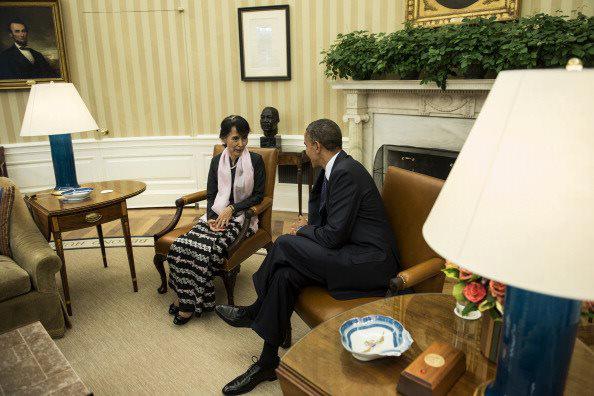
President Barack Obama will make an historic trip to Burma next week after allaying initial concerns about the visit expressed by Burma's top democracy advocate, Nobel Peace Prize winner Aung San Suu Kyi.
Administration sources confirmed to The Cable that Suu Kyi -- who was elected to parliament after being release from house arrest, where she was kept on and off since 1989 -- had several concerns about Obama visiting Burma when administration officials approached her about the potential visit over a month ago. She expressed those concerns directly to U.S. officials visiting Burma in October, multiple sources said.
"She had a lot of questions, a lot of concerns, but she was not like ‘Don't come under any circumstances,'" one source said. "She's very supportive now."
One of Suu Kyi's concerns was that Obama might visit Naypyidaw, but the president has no plans to visit the new Burmese capital; he will only go to Rangoon, the historical capital, sources said. Obama will also visit Suu Kyi in her home. Suu Kyi is now working closely with the administration to maximize the benefits of the visit.
But leaders of the Burmese exile community and human rights advocates worry that the president's trip comes too early.
"It is poor judgment by President Obama," said Aung Din, executive director of the U.S. Campaign for Burma. "It is too much, too fast, and too generous."
The Burmese military is still fighting and committing atrocities against ethnic minorities in Kachin State, violence directed against illegal immigrant Bengali Muslims in the western state of Rakhine is ongoing, and the Burmese government still holds at least 300 political prisoners, he said.
"I don't know how President Obama can be visiting Burma to strengthen the rule of the Thien Sein government and still see the clear picture of the so-called reform in Burma," he said. "Just wait some time and make some demands."
The Obama administration, after initially saying its warming of relations with Burma would be closely coordinated with Suu Kyi, has made other moves recently that the democracy leader opposed.
In July, Obama announced he was lifting the ban on U.S. companies investing in Burma, including in the Burmese energy sector, which allows U.S. corporations to do business with the Myanmar Oil and Gas Enterprise (MOGE), a move Suu Kyi opposed.
"The Myanmar Oil and Gas Enterprise (MOGE) ... with which all foreign participation in the energy sector takes place through joint venture arrangements, lacks both transparency and accountability at present," she said June 14 in a speech in Geneva. "The [Myanmar] government needs to apply internationally recognized standards such as the IMF code of good practices on fiscal transparency. Other countries could help by not allowing their own companies to partner [with] MOGE unless it was signed up to such codes."
Human rights leaders in Washington hold out hope that Obama's visit might be connected to deliverables that would actually move the reform process in Burma forward, although it's unclear if the president will be able to announce any specific measures during his visit to Burma Nov. 19.
"I very much want the president to go to Burma; I'm just not sure if November 2012 is the optimal time from the standpoint of leveraging the kind of transformation that the administration has been seeking," said Tom Malinowski, executive director of Human Rights Watch's Washington office.
Even the Burmese didn't expect to get a visit from the president of the United States until 2014 or 2015, when the next round of elections are set to occur, Malinowski said. The Obama administration has been easing sanctions on Burma, which was expected, but now the administration is giving up a key piece of leverage.
"Nobody expected we would skip to the final stage of normalization during what everyone acknowledged is a very early stage in the reform process. There used to be an action for action policy, that's the way they've described it for most of this year, I'm not sure if they would describe it that way today," he said.
Besides the release of political prisoners or steps to lower violence against ethnic minorities, there are several other deliverables the president could bring home with him from Burma. The administration has been pressing the Burmese government to allow humanitarian access to the northern part of the country, for example. The Burmese government could also permit the office of the U.N. High Commissioner for Refugees to establish a presence in Burma, which has been a longstanding request.
"The risk is that you can only send the president to Burma for this first time in history once," Malinowski said. "If all that comes of it that he gives a marvelous speech, then I'm not sure if that's a great outcome. If what comes of it is a successful leveraging of a presidential visit to get additional tough steps taken by the Burmese government, the trip will have been a success."
Obama will visit Burma as part of a Southeast Asia swing that will include stops in visit Thailand and Cambodia, where he will attend the East Asia Summit and the annual meeting of the Association for Southeast Asian Nations (ASEAN).
Secretary of State Hillary Clinton will join Obama on his tour, after making additional stops in Perth and Adelaide, Australia, and in Singapore. In Perth, Clinton will join Secretary of Defense Leon Panetta, Australian Foreign Minister Bob Carr, and Australian Defense Minister Stephen Smith for the annual Australia-United States Ministerial Consultations.
President Barack Obama will make an historic trip to Burma next week after allaying initial concerns about the visit expressed by Burma's top democracy advocate, Nobel Peace Prize winner Aung San Suu Kyi.
Administration sources confirmed to The Cable that Suu Kyi -- who was elected to parliament after being release from house arrest, where she was kept on and off since 1989 -- had several concerns about Obama visiting Burma when administration officials approached her about the potential visit over a month ago. She expressed those concerns directly to U.S. officials visiting Burma in October, multiple sources said.
"She had a lot of questions, a lot of concerns, but she was not like ‘Don't come under any circumstances,'" one source said. "She's very supportive now."
One of Suu Kyi's concerns was that Obama might visit Naypyidaw, but the president has no plans to visit the new Burmese capital; he will only go to Rangoon, the historical capital, sources said. Obama will also visit Suu Kyi in her home. Suu Kyi is now working closely with the administration to maximize the benefits of the visit.
But leaders of the Burmese exile community and human rights advocates worry that the president's trip comes too early.
"It is poor judgment by President Obama," said Aung Din, executive director of the U.S. Campaign for Burma. "It is too much, too fast, and too generous."
The Burmese military is still fighting and committing atrocities against ethnic minorities in Kachin State, violence directed against illegal immigrant Bengali Muslims in the western state of Rakhine is ongoing, and the Burmese government still holds at least 300 political prisoners, he said.
"I don't know how President Obama can be visiting Burma to strengthen the rule of the Thien Sein government and still see the clear picture of the so-called reform in Burma," he said. "Just wait some time and make some demands."
The Obama administration, after initially saying its warming of relations with Burma would be closely coordinated with Suu Kyi, has made other moves recently that the democracy leader opposed.
In July, Obama announced he was lifting the ban on U.S. companies investing in Burma, including in the Burmese energy sector, which allows U.S. corporations to do business with the Myanmar Oil and Gas Enterprise (MOGE), a move Suu Kyi opposed.
"The Myanmar Oil and Gas Enterprise (MOGE) ... with which all foreign participation in the energy sector takes place through joint venture arrangements, lacks both transparency and accountability at present," she said June 14 in a speech in Geneva. "The [Myanmar] government needs to apply internationally recognized standards such as the IMF code of good practices on fiscal transparency. Other countries could help by not allowing their own companies to partner [with] MOGE unless it was signed up to such codes."
Human rights leaders in Washington hold out hope that Obama's visit might be connected to deliverables that would actually move the reform process in Burma forward, although it's unclear if the president will be able to announce any specific measures during his visit to Burma Nov. 19.
"I very much want the president to go to Burma; I'm just not sure if November 2012 is the optimal time from the standpoint of leveraging the kind of transformation that the administration has been seeking," said Tom Malinowski, executive director of Human Rights Watch's Washington office.
Even the Burmese didn't expect to get a visit from the president of the United States until 2014 or 2015, when the next round of elections are set to occur, Malinowski said. The Obama administration has been easing sanctions on Burma, which was expected, but now the administration is giving up a key piece of leverage.
"Nobody expected we would skip to the final stage of normalization during what everyone acknowledged is a very early stage in the reform process. There used to be an action for action policy, that's the way they've described it for most of this year, I'm not sure if they would describe it that way today," he said.
Besides the release of political prisoners or steps to lower violence against ethnic minorities, there are several other deliverables the president could bring home with him from Burma. The administration has been pressing the Burmese government to allow humanitarian access to the northern part of the country, for example. The Burmese government could also permit the office of the U.N. High Commissioner for Refugees to establish a presence in Burma, which has been a longstanding request.
"The risk is that you can only send the president to Burma for this first time in history once," Malinowski said. "If all that comes of it that he gives a marvelous speech, then I'm not sure if that's a great outcome. If what comes of it is a successful leveraging of a presidential visit to get additional tough steps taken by the Burmese government, the trip will have been a success."
Obama will visit Burma as part of a Southeast Asia swing that will include stops in visit Thailand and Cambodia, where he will attend the East Asia Summit and the annual meeting of the Association for Southeast Asian Nations (ASEAN).
Secretary of State Hillary Clinton will join Obama on his tour, after making additional stops in Perth and Adelaide, Australia, and in Singapore. In Perth, Clinton will join Secretary of Defense Leon Panetta, Australian Foreign Minister Bob Carr, and Australian Defense Minister Stephen Smith for the annual Australia-United States Ministerial Consultations.
Getty Images
source: FP
source: FP


