Latest Videos from World News By BCJP TV

The Japanese based automaker Toyota has recently announced its plans to introduce the 2014 4Runner on the Old Continent too.

[postlink] https://burmacampaignjapanteam.blogspot.com/2013/05/the-japanese-based-automaker-toyota-has.html [/postlink]


The announcement has been recently made by the carmaker, who has introduced the new model just last week. 

The 2014 Toyota 4Runner, in the U.S., will come with a choice of three trim levels, the SR5, the Limited and the Trail, and the model is packing items such as the multi-information display, the Entune infotainment, the 7-inch display or the electric front seats.

The SR5 and the Limited versions are also getting a third row of seats too, along with the one-touch walk-in function, which is allowing easier access to the third row of seats. 

The 2014 Toyota 4Runner is powered only by the 4.0 liter V6 engine, which is producing a total output of 270 HP (201 kW) and 376 Nm of torque (278 lb-ft), mated to a five-speed ECT-I automatic transmission, which is sent to either the 4×2 or the 4×4. No details on what engines the European 4Runner will receive.

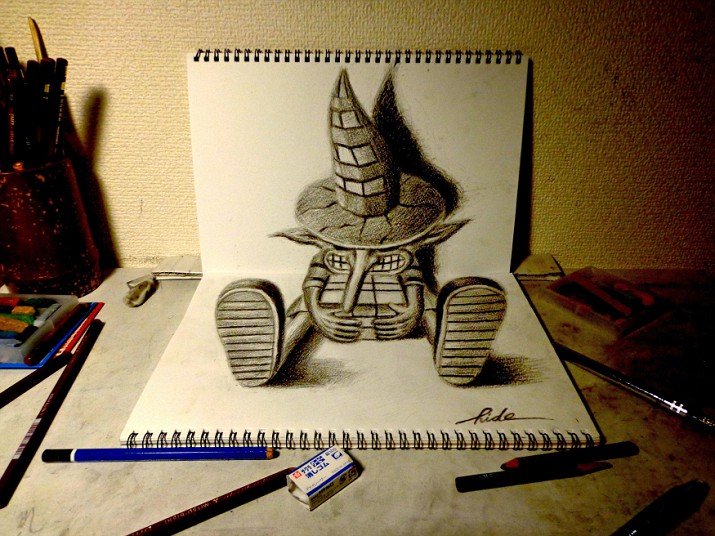
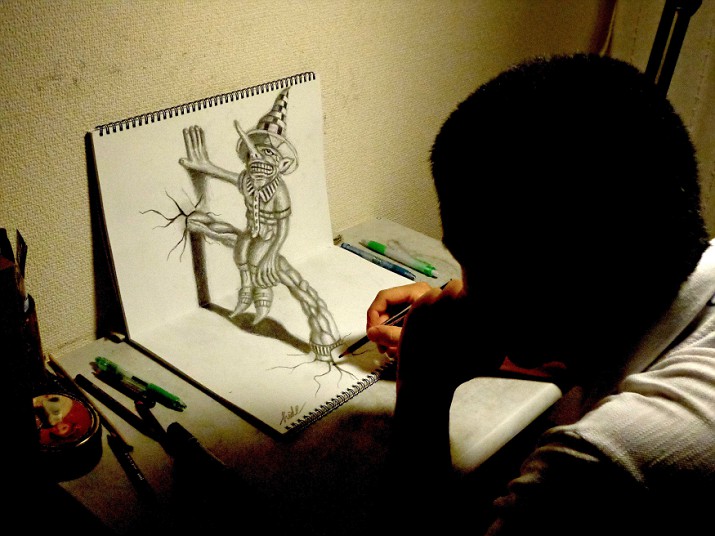
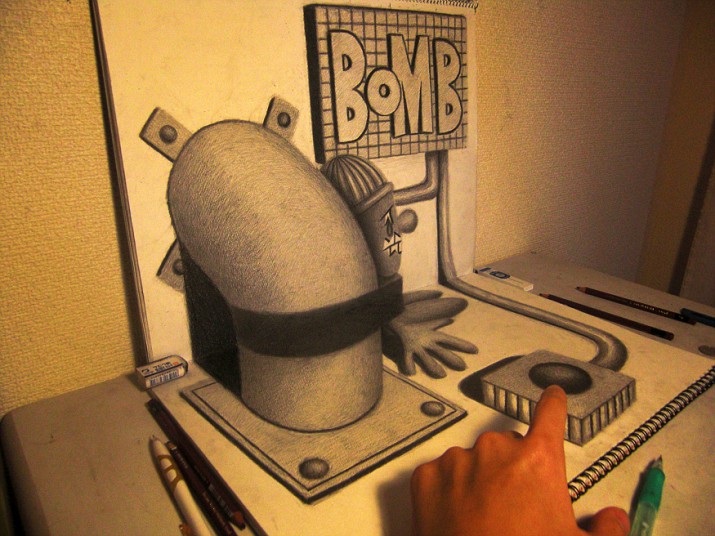
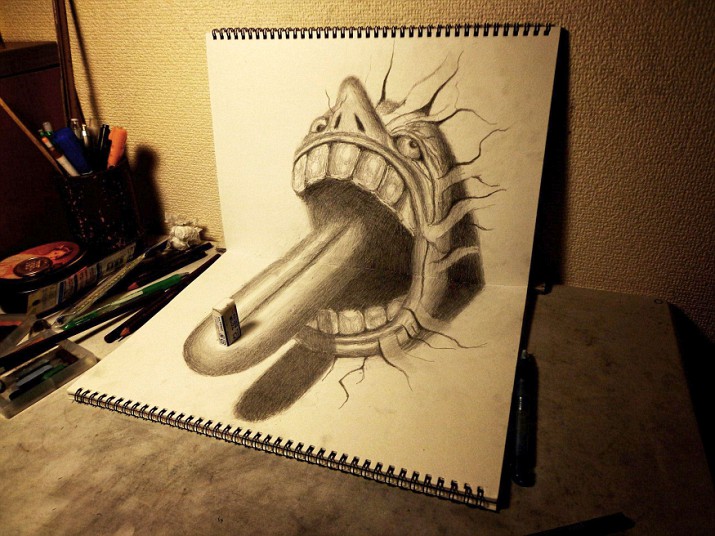
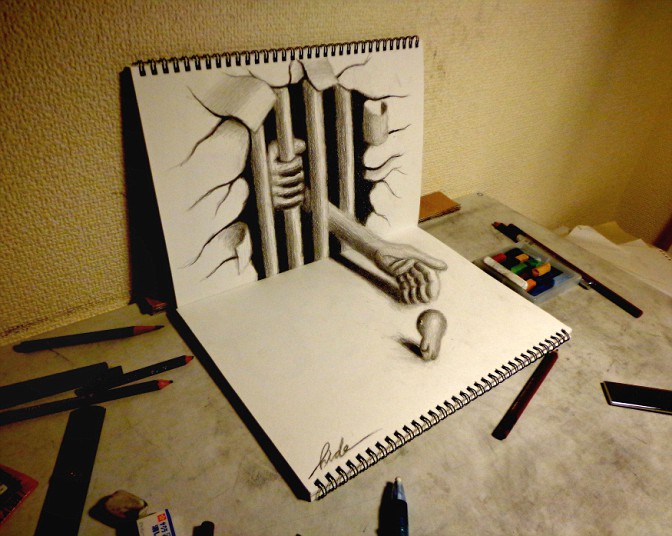
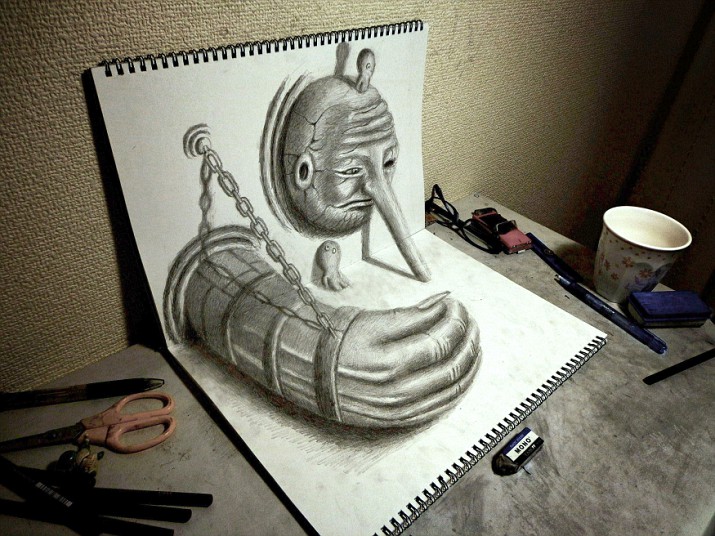
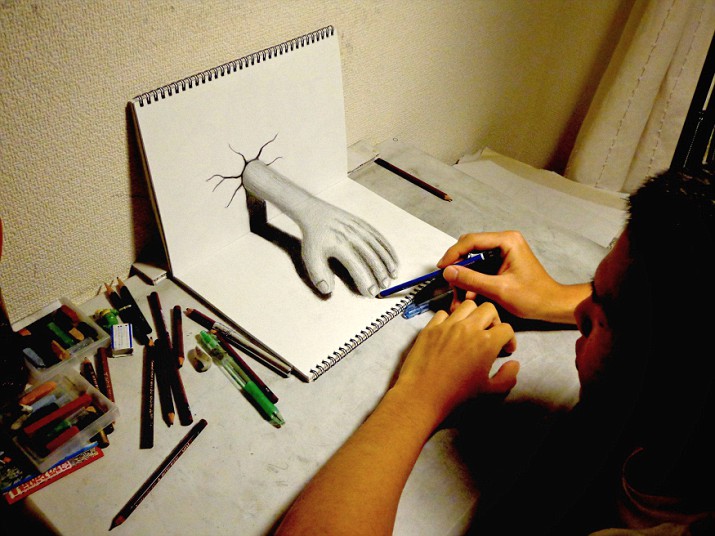
3D art by Japanese artist Nagai Hideyuki

[postlink] https://burmacampaignjapanteam.blogspot.com/2013/05/3d-art-by-japanese-artist-nagai-hideyuki.html [/postlink]

 Nagai Hideyuki, 21, from Japan, uses a pencil to conjure up amazing 3D drawings


This eye-popping artwork looks like its leaping off the page in 3D - but its actually a trick of perspective.


 Playing with light, shadow, and perspective, Japanese artist Nagai Hideyuki creates these stylised optical illusions using the entire spread of his sketchbooks.


Once propped against a wall and viewed from the perfect angle his illustrations seem to leap off the page creating a visual effect.


Pictures: Caters News Agency

ICG To Honor Myanmar President, Former Brazilian Leader In April 2013

[postlink] https://burmacampaignjapanteam.blogspot.com/2013/04/icg-to-honor-myanmar-president-former.html [/postlink]


Maverick Report
NEW YORK: The International Crisis Group will honor President Thein Sein of Myanmar and former president Luiz InĂ¡cio Lula da Silva of Brazil at its annual ‘In Pursuit of Peace Award Dinner’ here on April 22, 2013.
According to a statement, the Crisis Group’s Award Dinner is an opportunity to celebrate inspirational figures from government, diplomacy and public policy whose visionary leadership has transformed the lives of millions and brought forth the promise of a world free of conflict.
“At a time when so much of the world seems to be headed in the wrong direction, Myanmar and Brazil stand out as clear examples of presidents working for a better path for their people,” said Thomas R Pickering, chair of the International Crisis Group (ICG).
“Both President Thein Sein and President Lula are worthy recipients in this regard, having helped Myanmar and Brazil take significant steps forward and encouraged a greater role for them in promoting regional and international diplomacy following years of isolation,” said Pickering.
President Thein Sein
ICG President Louise Arbour said: “Myanmar has initiated a remarkable and unprecedented set of reforms since President Thein Sein’s government took over in March 2011, including freeing hundreds of political prisoners, liberalizing the press and promoting dialogue with the main opposition party.”
Of course, Myanmar still needs to build on this political liberalization to date, the ICG statement said. It must urgently find ways to address communal violence between the Rakhine and the Rohingya, which continues to devastate people’s lives, particularly those in minority Muslim communities, it added.
Still, the country has seen very significant progress: for the first time in almost fifty years, all but one of the ethnic armed groups has signed preliminary ceasefires with the government, and it is hoped that an agreement will also soon be reached with the Kachin Independence Organization, the statement said.
Luiz InĂ¡cio Lula da Silva
As President of Brazil from 2003 to 2010, Luiz InĂ¡cio Lula da Silva, known as Lula, propelled his country into a new economic and political era, taking millions out of poverty. Upon this solid foundation, his government became a critical regional and world player with a social agenda and bringing a South-South approach to international cooperation and global development.
President da Silva offered its regional neighbors a partnership, making integration a concrete reality. Brazilian diplomacy also helped its South American neighbors to face their own internal crises.
Brazil’s solidarity towards Africa was also notable with the country opening 17 new diplomatic missions there during President da Silva’s government. Brazil also took charge of the peacekeeping operation in Haiti and the naval part of the UN mission in Lebanon.
Lula’s government developed an autonomous diplomacy, in harmony with the demands of globalization and its development projects. Variable alliances enabled the nation to exercise a worldwide presence and deepen its influence. Brazil’s coalitions, strategic partnerships and new alliances enabled the country and its partners to fill a power vacuum in the international field.
Now in its eighth year, Crisis Group’s ‘In Pursuit of Peace Award Dinner’ recognizes the outstanding accomplishments of individuals working to prevent and resolve deadly conflict worldwide. Previous recipients of the awards include: US Presidents William Jefferson Clinton and George HW Bush; Nobel Peace Prize laureates Martti Ahtisaari and Ellen Johnson Sirleaf, and financier and philanthropist George Soros.

[postlink] https://burmacampaignjapanteam.blogspot.com/2013/04/a-mother-carries-her-baby-through.html [/postlink]

A mother carries her baby through rubble in Lushan County in Sichuan, China, on Sunday, April 21. A 7.0-magnitude earthquake hit China's southwest Sichuan Province on April 20. At least 180 people have died and another 24 are missing. 


Hong Kong (CNN) -- A strong earthquake struck the southwestern Chinese province of Sichuan on Saturday, killing at least 179 people and injuring about 6,700 others in a region that suffered a catastrophic quake five years ago, the state-run Xinhua news agency reported Sunday.
Thousands of emergency workers, including soldiers, rushed to reach the affected zones in the hilly region, and Chinese Premier Li Keqiang traveled to the area from Beijing, state media reported.
Xu Mengjia, the Communist Party chief of Ya'an, the city that administers the area where the quake struck, told state broadcaster CCTV that because of landslides and disruption to communications, determining the total number of casualties may take some time.


The quake struck just after 8 a.m. local time Saturday, about 115 kilometers (70 miles) away from the provincial capital, Chengdu, at a depth of around 12 kilometers, according to the U.S. Geological Survey. There was conflicting information about the earthquake's strength, with the USGS putting the magnitude at 6.6 and the China Earthquake Networks Center gauging it at 7.0.
It was followed by a series of aftershocks, some of them as strong as magnitude 5.1, the USGS said.
Authorities have responded by sending rescue workers to the area around the epicenter, briefly halting flights at the airport in Chengdu and suspending high-speed rail operations, state media reported.
The event stirred memories of the devastating earthquake that hit Sichuan in 2008, killing more than 87,000 people.

First responders to Saturday's quake reported that the damage caused didn't appear to be as severe as what was seen in the aftermath of the 2008 disaster, according to CCTV.
Fan Xiaodong, a student in Chengdu, said when the tremors began to shake buildings in the city, many of his startled classmates rushed out of their dorms, some of them wearing only the clothes they'd been sleeping in.
At first, Fan said, he only felt a slight trembling as he dozed in bed.
"I thought it was my roommates shaking the bed," he said. "But the shock became stronger soon, and it came to me that an earthquake happened."
The epicenter was in Lushan country, a district of Ya'an. That area is home to China's famous giant pandas and houses the country's biggest panda research center.
CCTV reported that the pandas at the facility, which is about 40 kilometers (about 25 miles) from the epicenter, were safe.
Residents of Chongqing, a sprawling metropolis more than 300 kilometers (about 190 miles) from Ya'an, said the quake also shook buildings there.


Boston locked down for massive manhunt; one bombing suspect killed by police, the other at-large

[postlink] https://burmacampaignjapanteam.blogspot.com/2013/04/boston-locked-down-for-massive-manhunt.html [/postlink]


 http://www.washingtonpost.com/live/video-2


By , and , Updated: Friday, April 19, 10:39 PM


WATERTOWN, Mass. — A massive manhunt was underway Friday morning in Boston and its suburbs, after one suspect in the Boston Marathon bombings died in a confrontation with police and the second was identified as a 19-year-old immigrant from Kyrgystan who, a classmate said, attended high school in Cambridge, Mass.

The two suspects are brothers, authorities said, and are believed to have lived in the United States with their family for several years. State Department officials said the family appears to have arrived in the country legally.

Boston, Watertown and several other suburbs were in an unprecedented state of lockdown on Friday, with mass transit canceled, schools and business closed and residents ordered to stay indoors.
Law enforcement officials said they believed the at-large suspect, Dzhokhar Tsarnaev, may be strapped with explosives. They were taking extreme precautions in an effort to avoid further loss of life.
A campus security officer at the Massachusetts Institute of Technology was killed in a confrontation with the suspects Thursday night, and a transit officer was critically wounded.
“This situation is grave. We are here to protect public safety,” Police Commissioner Ed Davis said. “We believe this to be a terrorist. We believe this to be a man here to kill people.”
(See the latest updates on the manhunt here.)
The suspects were introduced to the world via photos and video footage Thursday night. The one who was killed was identified as Tamerlan Tsarnaev, 26.
The brothers’ alleged motive in the bombings, which killed three people and injured more than 170, remains unknown, but their family appears to have immigrated from the Southern Russian republic of Chechnya, and two law enforcement officials said there is a “Chechen connection” to the bombings.
Dzhokhar Tsarnaev was born in Kyrgystan, law enforcement authorities said. He has a Massachusetts driver’s license. Tamerlan Tsarnaev was born in Russia and became a legal U.S. resident in 2007.
All public transportation was shut down in the greater Boston area Friday morning, officials said, and no vehicle traffic was permitted in or out of Watertown during the massive manhunt.
Residents of Boston, Watertown, Newton, Waltham and elsewhere were asked to stay inside, with their doors locked. Colleges and universities announced they would close for the day, and businesses were instructed not to open. Streets were ghostly quiet. Thousands of officers searched house-to-house, and some areas were evacuated.
A Massachusetts State Police spokesman says police closed down a stretch of Norfolk Street in Cambridge, where they think Dzhokhar Tsarnaev and his family lived. “We don’t know if he’s there. There is a possibility the suspect is there,” the spokesman, David Procopio, said.
Procopio said the manhunt was triggered after the brothers apparently robbed a 7-Eleven store on or near the MIT campus, about 10:20 p.m. Thursday night. They allegedly shot the Sean Collier, a 26-year-old MIT campus police officer, as he sat in his car. Collier, of Somerville, joined the force in January, 2012 after working as a civilian for the Somerville Police Department, officials said.
  
Soon after the shooting, the brothers are believed to have carjacked a Mercedes SUV from Third Street in Cambridge. The driver of the car was forced to stay in the vehicle for about 30 minutes, police said, then released at a gas station on Memorial Drive. He was unharmed.
“The guy was very lucky that they let him go,” Procopio said.

Police were trying to activate the tracking device on the Mercedes when other patrol officers spotted the vehicle in Watertown and tried to do a traffic stop, Procopio said. The suspects fled, throwing what Procopio called “IEDs” at police. Shots were fired, and multiple explosive devices were thrown from the vehicle. Some exploded, which led to panic and concern in the town.
Richard J. Donohue, 33, a three year veteran of the transit police force, was shot in the chase and is being treated at Mount Auburn Hospital, authorities said.
Tamerlan Tsarnaev — who was pictured in a black baseball cap in photos released Thursday evening— was fatally injured, law enforcement officials said.
He had been shot multiple times in the torso and also sustained injuries from some sort of explosives, said doctors at Beth Israel-Deaconess Medical Center, where he was taken. He was in cardiac arrest when he arrived at the hospital, and could not be revived.
Dzhokhar Tsarnaev— suspect No. 2, according to authorities — fled the vehicle on foot, which prompted the massive search.
“We have an active search going on by tactical teams. He’s considered armed and dangerous,” Col. Timothy P. Alven.
Procopio said that after the night of mayhem police have five active crime scenes around the Boston area. “We’ve got crime scenes we haven’t even been able to process yet,” he said.
A high school classmate of Dzhokhar Tsarnaev, Deana Beaulieu, described him as a quiet boy who had been on the wrestling team at Cambridge Rindge & Latin High School.
They attended school together since the 7th grade, first at Cambridge Community Charter School, then the high school, she said. He graduated in 2011.
Tsarnaev lived on Norfolk Street with his family, including an older brother and sister.
State Department officials said the Tsarnaev family appears to have arrived legally in the United States, though they did not specify when they arrived or the type of visas the family members had received.
Chechens have dispersed across the former Soviet republics and other countries in the region, but officials said there are not large numbers of them in the United States.
Chechnya has been racked by years of war between local separatists and Russian forces and extensive organized crime since the Soviet Union dissolved in 1991. The extent of the possible connection remained unclear.
Friday morning, the streets in and around Watertown were deserted, save for the enormous police presence. Outside the Arsenal Mall, hordes of reporters waited outside a staging area that was taking on the appearance of an armed camp, with State Police marching in formation, dozens of motorcycle police officers and the arrival of two large transit buses filled with police wearing neon safety vests. Agents with the Bureau of Alcohol, Tobacco and Firearms swept the area with a bomb-sniffing dog.
We’ve got every asset that we can possibly muster on the ground right now,” Gov. Deval L. Patrick said. “We are going to need the public to help us help them stay safe.”
Michael Demirdjian, 47, a postal worker from Watertown, said he was on his way back from Logan Airport early Friday when he suddenly found himself surrounded by police cars.
“It was amazing,” he said. “There were police cruisers all around. Thirty to forty cruisers followed us to my house.”
He made it to his house, on Spruce Street, but “it was in the zone and they wouldn’t let us in.”
He said he saw police going from house to house with dogs, searching, the area blazing with flashing emergency lights. Heavily armed police told him he could not enter.
“They said ‘no way.’ I want to go home but it looks like it’s not going to happen,” said Demirdjian, who had been awake all night. “I’d like for them to get this thing under control as soon as possible.”
Sari Horwitz in Washington and Annie Gowen in Watertown, Mass. contributed to this report.


Myanmar nation building must be supported by govt, private sector

[postlink] https://burmacampaignjapanteam.blogspot.com/2013/04/myanmar-nation-building-must-be.html [/postlink]


The Yomiuri Shimbun

Aung San Suu Kyi, leader of Myanmar's largest opposition party, the National League for Democracy (NLD), has visited Japan at the invitation of the government and had successive meetings with Prime Minister Shinzo Abe and Foreign Minister Fumio Kishida and others.
This is her first visit in 27 years. She was a guest researcher at Kyoto University in the mid-1980s before getting involved in the democracy movement in her home country.
Suu Kyi confronted the junta and was placed under house arrest for a total of about 15 years. Her Japan visit symbolizes Myanmar's democratization, which has been promoted by the administration of President Thein Sein since the country changed to civilian rule two years ago.
The Japanese government has welcomed the Thein Sein administration's reform efforts and has been proactively supporting the country through such actions as restarting official development assistance projects, including yen loans, ahead of the United States or European countries.


NLD and democratization

The government is trying to strengthen its relationship with the NLD on the thinking that growth of a sound opposition party in the national assembly could lead to further democratization of the country and stability of society. It is also thought that the NLD is likely to further gain strength in a general election to be held in 2015.
Abe told Suu Kyi during their talks, "We'd like to support your country so that reform can progress further." He then explained to her the government's policy of supporting Myanmar's nation building through ODA and private investment.
Suu Kyi responded that she hopes Japan will cooperate with Myanmar in the country's development. She asked for Japan's assistance for her country in vocational and agricultural education, among other fields.


Concrete achievements

Since she was elected in the House of Representatives, the lower house of the Assembly of the Union, in spring last year, she has been trying to transform from a pro-democracy leader outside the government into a pragmatic politician. To respond to supporters' expectations, she needs concrete achievements such as an improvement in the country's standard of living.
There is a rough road ahead for Myanmar's nation building. As Suu Kyi insists, the Constitution must be revised for further democratization, including the abolishment of guaranteed seats for the military in the assembly, which are stipulated in the Constitution to secure the military's political influence.
Efforts of the Myanmar government to improve relations with ethnic minorities who have confronted it have seen rough going, meaning national reconciliation is not in sight. Also, worsening public security may pour cold water onto Japanese companies' passion for investment in the country.
Of all countries, Japan is providing the most economic assistance to Myanmar. It is important for Japan that the public and private sectors cooperate in development assistance to Myanmar, which contributes to the stabilization of society, such as raising the standard of living for ethnic minorities and improvement in roads and electricity.
The strategic value of Myanmar, which is situated in an important location between the Indian Ocean and the South China Sea, has been ever increasing. Myanmar has turned away from its exclusively pro-China diplomacy under military rule and has been strengthening relations with such countries as Japan, India and the United States.
To keep China, which has been increasing its influence through military and economic expansion, in check, it is important for Japan to deepen relations with Myanmar.

(From The Yomiuri Shimbun,
April 19, 2013)

Diplomats say EU is set to drop most sanctions against Myanmar to reward democratic reforms

[postlink] https://burmacampaignjapanteam.blogspot.com/2013/04/diplomats-say-eu-is-set-to-drop-most.html [/postlink]
BRUSSELS — The European Union will drop most sanctions against Myanmar to reward the country’s progress toward democracy, two EU diplomats said Friday.
The decision will be formally taken by the bloc’s 27 foreign ministers when they meet Monday in Luxembourg, in a bid to support the southeast Asian nation’s transition, the diplomats said.
The sanctions were suspended last April for one year after the country’s military rulers handed over power to a civilian government that launched democratic reforms. The measures had targeted more than 800 companies and nearly 500 people, and also included the suspension of some development aid.
“The suspension provided a probation period, and we have now seen that we can be relatively reassured on the authorities’ commitment to pursue the path toward democracy,” said one of the diplomats.
However, an embargo on arms and equipment that can be used for internal repression will remain in place, the diplomats said. They spoke on condition of anonymity ahead of the formal decision by the ministers next week.
The end of sanctions should also encourage firms from the 27-nation EU — the world’s largest economy — and development organizations to strengthen their engagement in Myanmar, they said.
Myanmar, long a dictatorship, is undergoing a remarkable transition since the military handed over power in 2011.
President Thein Sein’s government has released hundreds of political prisoners, eased restrictions on the press and freedom of assembly and brokered cease-fires for some of the nation’s ethnic insurgencies. After years of house arrest, opposition leader Aung San Suu Kyi, a Nobel Peace Prize laureate, has been elected to parliament — which is performing its role with vigor.
But the rapid pace of change has also been accompanied by some chaos, with ugly sectarian tensions in the multi-ethnic country of some 60 million resurfacing.
Human rights groups and a U.N. envoy have criticized the Myanmar government’s failure to prevent attacks mostly on minority Muslims by majority Buddhists. Sectarian violence in western Rakhine state last year killed hundreds and drove more than 100,000 Rohingya Muslims from their homes, intensifying long-running persecution of the stateless minority group. In an ominous development, Muslim-Buddhist violence spread in March to central Myanmar, killing dozens more.
___
Follow Juergen Baetz on Twitter at http://www.twitter.com/jbaetz
Copyright 2013 The Associated Press. All rights reserved. This material may not be published, broadcast, rewritten or redistributed.
 
Support : Website | Template | Mas Template
Copyright © 2012. Burma Campaign Japan - All Rights Reserved
Template Created by Creating Website Published by Template
Proudly powered by Blogger