Latest Videos from World News By BCJP TV
Showing posts with label hnm9san. Show all posts

Illegal immigrant Bengali Muslims (so-called Rohingya) was attacked Arakanese Buddhist women again.

[postlink] https://burmacampaignjapanteam.blogspot.com/2013/11/illegal-immigrant-bengali-muslims-so.html [/postlink]


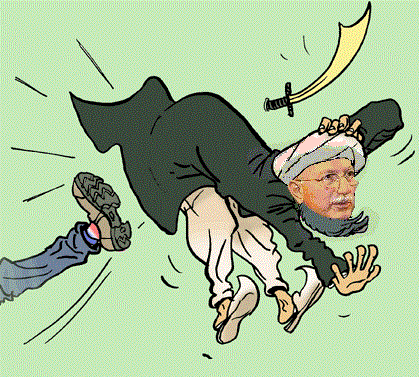
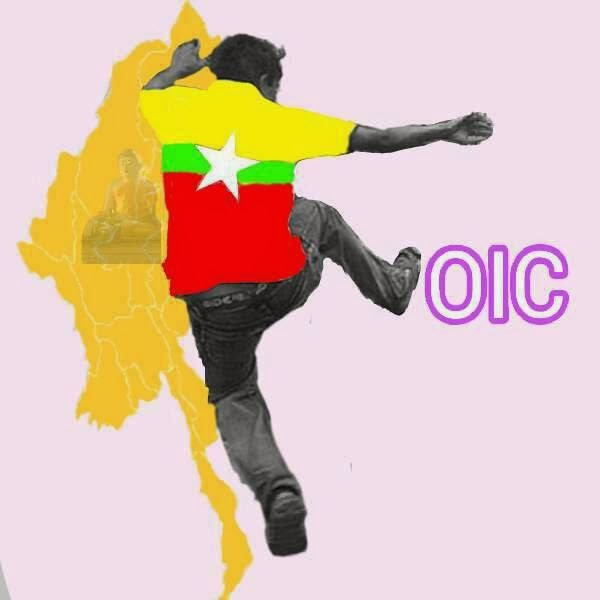
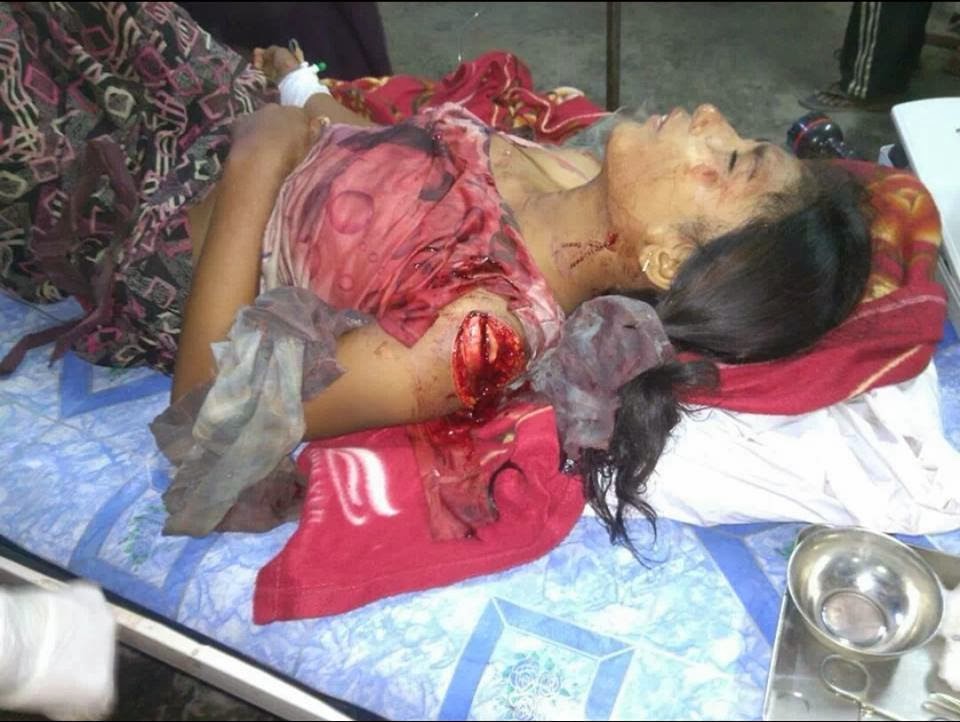
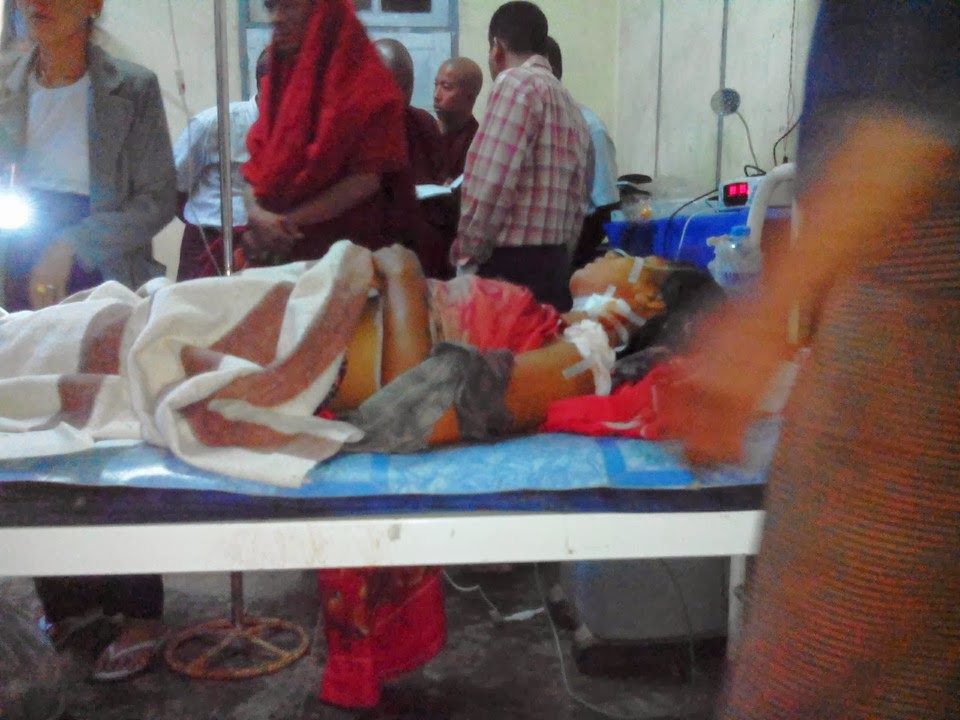
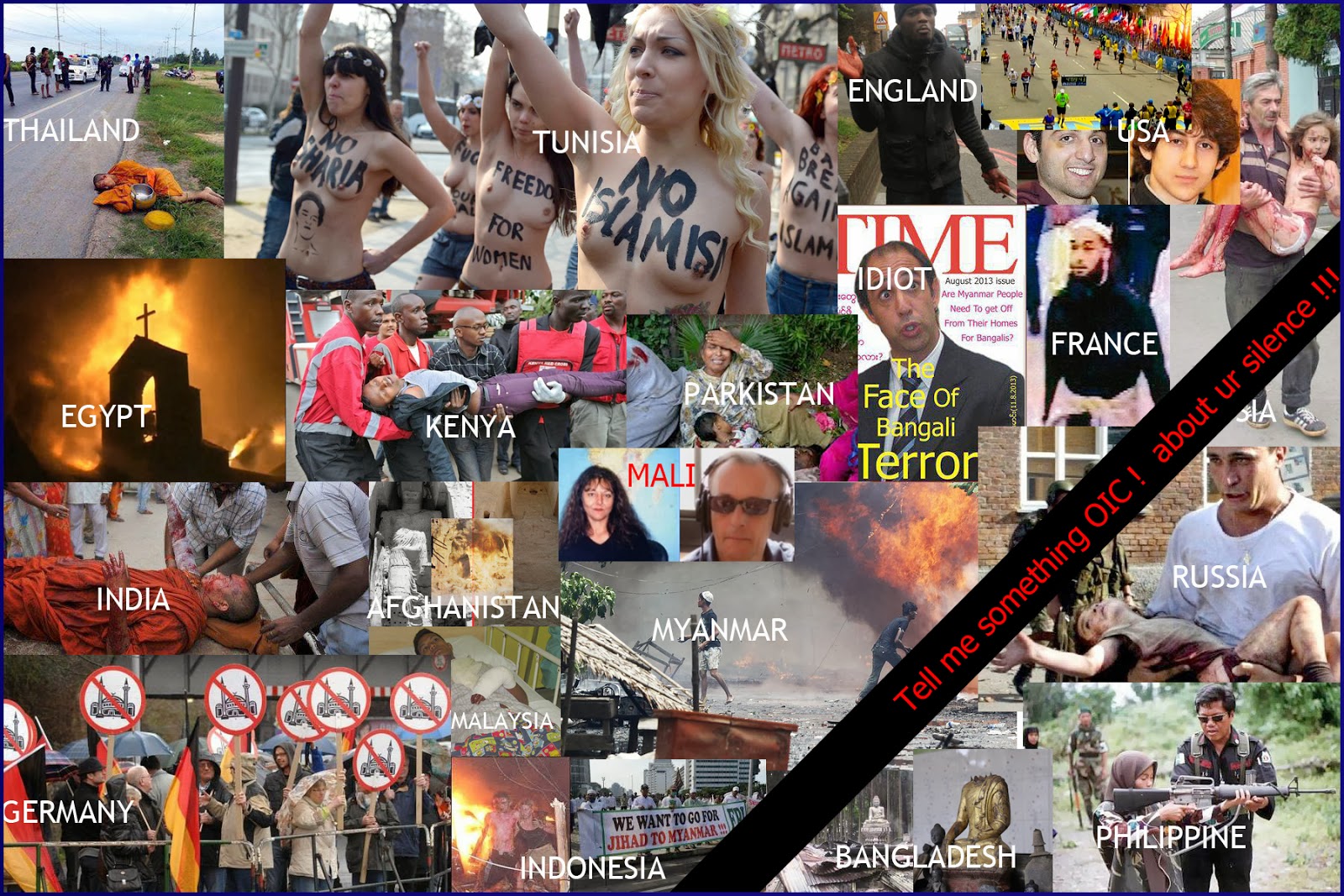
At 4:00 PM, on the 2nd of November, 2013, at Sin-aing Village, Pauktaw Township, Rakhine (Arakan) State, a crime against Arakanese Buddhist women was committedby the Bengali Muslims (so-called Rohingya). It happened as follows. Some 30 Arakanese Buddhist women went for collecting mollusks at that time and some 50 Bengali Muslims hacked them with knives. Consequently, Ma Hla Khin, a 40-year-old Arakanese Buddhist woman, died from the wounds on the spot and Ma Than Khin, an 18-year-old Arakanese Buddhist girl whose father is named U Sein Hla Tun, got quite a serious wound on her left arm, another on her back, another wound on her neck. Now the victim woman has been hospitalized as an emergency patient at Sittwe General Hospital. ွွSome Arakanese scholars opine that Bengali Muslims did this as they want to do something bad towards the Arakanese community and then to reverse the story in their pro-Bengali media, and that the Bengali Muslims did this because they got news that OIC will come to Myanmar soon!


Myanmar’s 2015 Stock Exchange Deadline at Risk: Southeast Asia

[postlink] https://burmacampaignjapanteam.blogspot.com/2013/09/myanmars-2015-stock-exchange-deadline.html [/postlink]

A woman leaves the Myanmar Securities Exchange Centre (MSEC), a joint venture between state-owned Myanma Economic Bank and Daiwa Institute of Research Ltd., a unit of Japan’s second-largest brokerage, in Yangon on May 3, 2012.
 Photographer: Soe Than Win/AFP/GettyImages

Myanmar is running behind schedule for starting a stock exchange by 2015 after delays in getting the legal framework in place, said an executive at Japan Exchange Group Inc. (8697), which is assisting on the project.
“We’re pressed for time,” Koichiro Miyahara, senior executive officer at Japan Exchange, said in an interview in Tokyo on Aug. 27. He said the late approval of a capital markets bill has delayed the project, and it’s up to the Myanmar government as to how fast it can set up related organizations such as a securities regulator.
Japan Exchange’s predecessor Tokyo Stock Exchange Group Inc. and Daiwa Securities Group Inc. (8601) were chosen last year to help Myanmar set up a stock exchange as the Southeast Asian nation opens itself from decades of isolation and military rule. Companies from Coca-Cola Co. to Unilever Plc. are investing in the country of 64 million people after the U.S. eased economic sanctions last year.
“Like any other modern economy, Myanmar needs a capital market to allow companies to raise funds,” said Moe Thuzar, a Singapore-based research fellow at the Institute of Southeast Asian Studies. “It is more important to ensure that appropriate regulatory and operational infrastructure is in place” rather than meet an arbitrary deadline, she said.

Passed Law

Myanmar President Thein Sein signed the Securities Exchange Law on July 31. The legislation sets rules that include the establishment and operation of a securities regulator to oversee trading activity.
Miyahara, who is in charge of Japan Exchange’s contribution to the project, said he had expected the bill to be passed at the start of 2013 and the delay will shorten the time for developing the bourse by about a year. His company will make “every effort” to complete the work on time, he said.
Regulations still need to be developed under the law to outline how the exchange will function, Maung Maung, director general at the Central Bank of Myanmar, said in a phone interview yesterday. The government will begin working on infrastructure such as buildings and software for the bourse next year and it will begin operating in 2015, Deputy Finance Minister Maung Maung Thein said at a briefing on Aug. 23.
Japan Exchange and Daiwa’s research unit, both based in Tokyo, have completed a report on the framework for the exchange, including plans for its functions and system infrastructure, Miyahara, 56, said. They will submit the document to the Myanmar government this month, he added.

Shigeto Inami, managing director of Myanmar Securities Exchange Centre, said about eight companies may be listed when the exchange opens. Photographer: Junko Kimura/Bloomberg

Investor Interest

The Securities Exchange Law doesn’t say whether foreigners will be allowed to trade on the bourse.
Jim Rogers, chairman of Rogers Holdings in Singapore, and Mark Mobius, executive chairman of Templeton Emerging Markets Group, are among investors who see opportunities in the country over time.
“It’ll take time for Myanmar, but Myanmar definitely is going to get more and more investment,” mainly in infrastructure, Mobius, who manages $53 billion, said in an interview on July 29. He has indirectly invested in the nation through companies listed in Singapore and Thailand.
About eight companies may be listed when the exchange opens, according to Shigeto Inami, managing director of Myanmar Securities Exchange Centre, a joint venture between state-owned Myanma Economic Bank and Daiwa Institute of Research Ltd., a unit of Japan’s second-largest brokerage. Two stocks are currently traded over the counter at the center, making them candidates to list on the new bourse, Inami said.

Cambodia, Laos

Those companies are Myanmar Citizens Bank Ltd. and Forest Products Joint Venture Corp. Soe Thein, an executive director at the center, declined to comment on the performance of the two stocks in the over-the-counter market or whether the semi-government institutions are candidates for listing.
Other frontier Southeast Asian economies have opened stock exchanges in recent years, with mixed results. Trading on the Cambodia Securities Exchange began last year and it currently has one company listed, according to its website. The two-stock Laos Composite Index (LSXC)has risen 30 percent since its bourse started trading in January 2011. It slipped 0.1 percent at 9:41 a.m. in Vientiane.
“If you look at Cambodia and Laos, the stock exchanges haven’t been a great success,” said Thura Soe Paing, managing director of All Myanmar Investment Partners, a Yangon-based investment and business advisory company. “What I hope an establishment of a stock exchange will drive forward is the development and installation of business standards.”
Japan Exchange, which itself listed in Tokyo in January following the merger of Tokyo Stock Exchange and Osaka Securities Exchange Co., expects the Myanmar project will enable it to export its expertise elsewhere, Miyauchi said.

Toshiba, KDDI

“We’d like to maximize our experience and know-how to work with countries that are thinking about setting up stock exchanges,” said Miyahara.
Other Japanese companies are working on the Myanmar project. Toshiba Corp. (6502) andKDDI Corp. (9433) won an order from Daiwa Research to supply a data center for the exchange, Tokyo-based Toshiba said on July 3.
President Thein Sein has allowed more political freedom and loosened economic controls since coming to power two years ago. Assuming his government maintains momentum on policy reform, the economy will expand 6.5 percent in the year ending March 2014 and 6.7 percent in the following fiscal year, the Asian Development Bank forecast in April.

Phone Network

One area where Thein Sein has already moved to modernize the economy is in telecommunications. In June, Norway’s Telenor ASA (TEL) and Ooredoo QSC of Qatar won licenses to expand the country’s telecommunications network, beating nine other bidders. The government went ahead with the award even after parliamentarians tried to delay the decision.
A stock exchange with a strong securities regulator would help to improve corporate governance in a country that remains plagued by corruption. Myanmar is ranked 172 out of 176 nations in Transparency International’s 2012 corruption index.
“I hope Myanmar corporates know that it is a painful process to list and what will be required of them with regards to reporting, transparency and accountability,” said Thura Soe Paing of All Myanmar Investment. “It will be worth it in the long run.”
To contact the reporters on this story: Takako Taniguchi in Tokyo atttaniguchi4@bloomberg.net; Kyaw Thu in Bangkok at kthu1@bloomberg.net
To contact the editor responsible for this story: Chitra Somayaji at csomayaji@bloomberg.net
By Takako Taniguchi & Kyaw Thu - Sep 4, 2013 12:05 PM GMT+0900

We will never welcome to your visit !!!

[postlink] https://burmacampaignjapanteam.blogspot.com/2013/08/we-will-never-welcome-to-your-visit.html [/postlink]


This is the protest to Mr Quintana from Sittwe, Arakan State. There are the reason behind this why the people actually not welcoming Mr Quintana. Whenever Mr Quintana come, the conflicts became more worse and more complicated to solve. There were incidents like torching houses, killings and several incidents were reported to be happened in Arakan state only when Mr Quintana plan to visit Burma. Also, his reports are as usual one sided bias story full of accusations towards the people in Arakan state. In order to explain and reveal the truths, the Arakans published the reports recently. Arakan Human Rights and Development Organization (AHRDO) has compiled a large and comprehensive report about the conflict and violence in Arakan (a.k.a. Rakhine State), in the western part of Burma (a.k.a. Myanmar), titled:
Conflict and Violence in Arakan (Rakhine) State, Myanmar (Burma):
What is Happening, Why and What To Do


If Mentioning human walfare, Those regional tribes; Rakhine,are human, too not issused Those rakhine people’s
human walfare,Only keep on repeating about the Bangali by (khintanar’s mission) are coming as a Question
derived from us.thus, there are not the same or the standard of nationalitie’s constitution at international mandate.
If speaking linked to international constitution. That constitution is just a nation’s internal case by
what it was coded as the nation’s need and nation’s security so, the people lived in that nation must make it up.
www.alodawpyei.org


- Stop Discrimination Against Arakanese. (ရခိုင္ျပည္သူေတြကိုခြဲျခားဆက္ဆံတာကိုရပ္တန္႔ပါ။)
- Respect the President’s Decision. (သမၼတၾကီးရဲ့ ဆုံးျဖတ္ခ်က္ကိုေလးစားပါ။)
- Stop Being Unjudgement. (တရားမမွ်တမႈ႕ကို ရပ္တန္႔ပါ။)
- UN Itself the Human Rights Violater. (UN သည္လည္း      လူ႕အခြင့္အေရးခ်ဴိးေဖာက္သူသာျဖစ္သည္။)
- Don’t Bring Terrorism to Our Land. (က်ေနာ္တို႔ေျမသို႔ အၾကမ္းဖက္မႈ႕ မသယ္ယူလာပါနွင့္။)
- Stop Creating Conflicts in Arakan. (ရခိုင္ျပည္၌ပဋိပကၡမ်ားဖန္တီးျခင္းရပ္တန္႔ပါ။)
- Respect the Majority of Myanmar Citizen’s Wish. (ျမန္မာနိုင္ငံသားအမ်ားစု၏ဆႏၵကိုေလးစားပါ။)
- Respect Myanmar Law. (ငါတို႔ဥပေဒကိုေလးပါ။)
- Right to protect our land. (ငါတို႔နိုင္ငံကိုကာကြယ္ဖုိ႔ငါတို႔တာ၀န္။)
- Our law is important for our country. (ငါတို႔ရဲ့ဥပေဒဟာ ငါတို႔နိုင္ငံအတြက္အေရးၾကီးဆုံး။)
- Don’t abuse the Human Rights. (လူ႕အခြင့္အေရးကိုအလြဲသုံးစားမလုပ္ပါနဲ႔။)


RSV

Christians are being slaughtered by Wahhabi Islamists all over the world: who is their Stephen Fry?

[postlink] https://burmacampaignjapanteam.blogspot.com/2013/08/christians-are-being-slaughtered-by.html [/postlink]


In April 1996, Pope John Paul II attacked the intransigence of ‘followers of other religions’ who were persecuting Christians. He didn’t specify Islam, but everyone know who he meant.

In his Easter message Urbi et Orbi, he said Christians in Africa, Latin America, Asia and Europe had "legitimate aspirations" to jobs, housing, social justice and religious freedom which were "hindered" by other faiths. The Times continued: 'The Pope recently condemned Islamic persecution of Christians in Sudan and will travel to Tunisia next weekend to plead for Islamic tolerance and Islamic-Christian dialogue.'

Nothing has really changed in almost 20 years. Indeed, the situation for Christians in these regions has actually become an awful lot worse.

The head of the Coptic Orthodox Church, for example, Pope Tawadros II, has had to cancel many public events at St Mark's Cathedral in Cairo, fearing attacks from Brotherhood supporters who blame the Copts for the fall of Morsi. Indeed, the Copts in Egypt, who make up around 10 per cent of the population, have it an awful lot worse than gays in Russia. But there is no rolling coverage of their plight by the BBC: their persecution and murder is only mentioned in passing. No marches are staged in London; there is no damning comment by David Cameron or President Obama, and the world is largely silent as their churches are torched and congregations slaughtered.

Pope Tawadros was not the only religious leader who demanded change in Egypt, but his church is bearing the brunt. The Copts are increasingly fearful of meeting to worship: one of their number was recently kidnapped and beheaded in the Sinai.

And in Syria, Christians are being executed in their homes or subject to the judgments of sharia courts established to pass sentences upon those who violate precepts of Wahhabi Islam. As the Sunni 'rebels' struggle for 'freedom', the country's 2.5 million Christians pray for the restoration of Alawite President Assad, their guardian and protector. Under him they had freedom to assemble, worship and speak. Indeed, Syria was for many the country of choice for Assyrian Christians fleeing the post-Saddam persecution. Their community is 2000 years old: today, they are verging on extinction.

But it is in Nigeria where the Islamist jihad rages most fiercely: according to a report on the Middle East Forum, 70 per cent of Christians killed around the world in 2012 were killed in the African nation. They list the most recent church Attacks:
Egypt: According to El Watan News, three Christian brothers were shot dead at their home by automatic weapons a few weeks before two were set to have their weddings. The victims' family was earlier accused of trying to build a church on land they owned because they purchased building material to build a house on that land. The rumors about the building of a church spread during the Friday sermon at the mosque, following which 2,000 Muslims stormed the land and tried to destroy the house, car and tractor, resulting in the murder of the three Christian brothers.

Indonesia: Authorities demolished a church building with a bulldozer in West Java, even as Muslim bystanders cheered and denounced Christians as "infidels." According to Pastor Leonard Nababan, the government is "criminalising our religion." The congregation had gathered around the church in an effort to save it; so did Muslims, shouting, "They're infidels and they've built their church without permission," "Knock the church down now" and "Allahu Akbar."

Iraq: According to Fox News, before the U.S. invasion of Iraq, there were more than 300 Christian churches. Today, a decade after the jihad was unleashed on Christians and their churches, only 57 Christian churches remain in the nation. And "The churches that remain are frequent targets of Islamic extremists, who have driven nearly a million Christians out of the land…" An Iraqi-based human rights organization said that "The last 10 years have been the worst for Iraqi Christians because they bore witness to the biggest exodus and migration in the history of Iraq…. More than two-thirds [of Christians] have emigrated." One of the most dramatic cases of Christian persecution came in late October of 2010, when Al Qaeda members laid siege to Our Lady of Deliverance Church in Baghdad, killing 58 and wounding 78. According to an AP report "Iraq's Catholic Christians flocked to churches to celebrate Easter Sunday [in March], praying, singing and rejoicing in the resurrection of Christ behind high blast walls and tight security cordons… [emphasis added]."

Libya: A Coptic Christian church located in Benghazi was attacked by armed Muslims. The jihadis severely beat and shaved the beard and mustache of Father Paul, the priest of the church, as a sign of humiliation. They also beat the deacon and nine attendees. Meanwhile, because Egypt's Muslim Brotherhood-led government had done little regarding the systematic abuse of Egyptian citizens in Libya, including the murder of one under torture, Copts demonstrated in front of the Libyan embassy in Cairo—prompting yet another attack on the Benghazi church, which was set on fire.

Pakistan: In response to one Christian man accused of blaspheming Islam's prophet thousands of Muslims attacked the Christian Joseph Colony of Lahore, burning two churches, one Catholic, the other a Seventh Day Adventist, as often happens in Pakistan in the context of collectively punishing Christians.

Sudan: According to Morning Star News, Khartoum's jihad continues to "rid the area of non-Arabs and Christianity": the Evangelical Church in the Nuba was "reduced … to ashes" after an aerial bombardment. Days later, another bombing campaign left two dead and twelve injured, in the Christian-majority region. "These bombardments are major sources of fear among the people in South Kordofan," said a church leader.

Turkey: The 5th century Studios Monastery, dedicated to St. John the Baptist, is set to go from being a branch of the Hagia Sophia—Christianity's grandest cathedral, which was transformed into a mosque, after the Islamic conquest and is currently a museum—to being an active mosque. Many Turkish Muslims continue calling for the return of the Hagia Sophia itself to a mosque.
Where is their Stephen Fry? Who will be their celebrity champion with millions of Twitter followers, to whom the mainstream media will fawn and David Cameron and Barack Obama instantly respond?

Jammu: Hindus Under Attack from Muslim Mob & Secular Media Trying to Hush-up the News

[postlink] https://burmacampaignjapanteam.blogspot.com/2013/08/jammu-hindus-under-attack-from-muslim.html [/postlink]
Photo; Kashmir riots

August 9, 2013 Jammu: After today’s Eid Namaz an armed mob of 20,000 Muslims marched toward Hindus & attacked them. Many Hindus were severely injured & some are critical. While this was happening, another mob attacked & burnt shops & housed owned by Hindus. Serious arson, looting & murders went on for long since the morning Namaz. Until afternoon there was no help from the Govt. Then came police but of no use. Many Hindu youth are in hospitals with bullet injuries in arms & abdomen. In the afternoon Govt sent Army there but with no orders to shoot at sight on the killers. The mob went on rampage. Army kept on doing flag march & the info from there is that the 20,000 strong mob even looted army weapons. 


 VHP International Working President Dr Pravin Togadia said, “VHP demands immediate action on all 20,000 in the mob that attacked minority Hindus there. It also should be found out that who really led such a big mob when there should have been security in the valley after Pakistan’s attacks on the LOC. Such big violence against Hindus continued all day long & how nobody intervened to really protect the Hindus?” VHP also demands resignation of the J&K Home Minister for his role in the Kishtwad attacks on Hindus. Those who are injured should immediately get adequate compensation. Those whose houses were burnt should be given compensation a the market rate of the house & all materials to rebuild their houses. Hindus whose shops were burnt should be given compensated with the losses of their goods & shop establishment as well as for the loss of probable business. In 1990 similar violent tactics were followed by the Kashmiri Separatists to kill & chase away Hindus from Kashmir. Now they have come ahead & on the border of Jammu in Kishtwad, Rajauri, such attacks have been taking place. It is the sole responsibility of the state & the Union Govt to protect each Hindu in J&K failing which the Hon. Supreme Court should take suo motto note & order the army to shoot at sight on those who attack Hindus there. VHP & Hindu Human Rights Commission Team assisted by a retired police officer, an eminent lawyer, other Hindu organizations & a social worker will visit Kishtwad soon as soon as the curfew is lifted. The team should be given all cooperation as Minority Commission is supposed to get. The report will be made public. VHP, Bajrang Dal in Jammu have protested today & demanded immediate action to protect Hindus & punish the attackers. (Remember, Being Secular is synonymous to Being Anti-Hindu).


Sameer Gupta
Director,
International Unity for Equality
 

Syrian Rebels to Assyrians: Convert to Islam to Keep Your Jobs

[postlink] https://burmacampaignjapanteam.blogspot.com/2013/08/syrian-rebels-to-assyrians-convert-to.html [/postlink]


Posted GMT 8-4-2013 18:13:12 

Al Thawrah, Syria (AINA) -- Accounts by Assyrian refugees from al-Thawrah(also known as al-Tabqah) reveal the real face of the Islamist undercurrent within the Syrian opposition. Furthermore, these accounts serve as a stark and chilling reminder of what has already been suffered by non-Muslim communities in Iraq since 2003.
On February 11, rebel fighters from the al-Nusra Front took control of the city and its strategic dam, the largest of its kind in the country. They also seized control of the three quarters that housed dam workers - many of whom were Christian Assyrians. Whilst they allowed the dam's original staff to remain in the city in order to continue its operation, management and upkeep, those who were not Sunni Muslim were not afforded the same privilege.
"Everything is now in Jabhat al-Nusra's hands," complained one Assyrian refugee, "All the Muslims stayed there, but if any Christians want to go back they have to become Muslim or else they will be killed."
Christians report their property being stolen, their homes being confiscated, and their possessions being sold on the black market in order to buy weapons and ammunition. In many of these cases, those forcefully dispossessed were not even allowed the chance to take with them any of their personal belongings.
According to the jihadist Islamist ideology espoused by such forces as the al-Nusra Front, the properties and possessions of such "infidels" are halal (fair game), and it is not a sin to plunder them.
They also threatened Christians with death if they did not comply with strict Islamic laws. "They would call and text me on my cell phone, ordering me to do as they say, or else they would kill me! Can you imagine it?" said a Christian man from al-Thawrah, who had lost all he owned, and is now internally displaced with his family. "Even though I have left they still call me from there to bother me, so I keep my phone switched off unless I really need to use it."
The gruesome story (AINA 4-3-2013) of an Assyrian man from al-Hasakah Governorate, allegedly shot by rebels in an execution-style murder just outside al-Thawrah in April 2013, still sends shivers up the spines of those who knew him. He used to earn a living transporting people between al-Hasakah and al-Thawrah, until his car was confiscated by al-Nusra fighters. "They told him that he could buy it back from them, so he returned to his village to bring them the money," one refugee related, "He should have stayed put and thanked God that they hadn't killed him then and there, but he didn't listen to reason and left with the money they'd requested. No one ever saw him alive again. How will his wife and four children support themselves now?"
Whilst this case has been well-documented, many of the Christian refugees from al-Thawrah insisted that certain details be excluded from their testimonies since, being a small community, they were fearful of being identified and subsequently suffering the consequences. They are also too frightened to provide too much information over the phone or on the internet because they believe that these are being monitored by elements within Syria's opposition.
For most of them, staying in Syria is no longer a viable option either. To leave for Turkey or Lebanon, on the other hand, is also fraught with its own perils. "All the roads are full of rebel fighters," lamented another Assyrian refugee who refused to disclose his location, "It's really dangerous. We have lost everything," said the head of an Assyrian household displaced from al-Thawrah, "There is nothing for us over there now, nothing to return to. We just need help to get out of here and settle in a country that's safe."

Extremist Bengali Muslim Settlers Attack Nine Indigenous Villages In CHT 500 hundred houses burnt down, 6 killed, dozens injured, several missing 3 August 2013.

[postlink] https://burmacampaignjapanteam.blogspot.com/2013/08/extremist-bengali-muslim-settlers.html [/postlink]


Primary reports from the local sources said hundreds of Bengali Muslim settlers carried out arson attacks on nine villages of indigenous people in Taidong area under Matiranga Sub-district of Chittagong Hill Tracts. 500 houses of indigenous people were burnt to ashes. Six indigenous people were killed and dozens of indigenous people were injured in these attacks. Several indigenous people, especially women and children, were reportedly missing. The villages attacked are: Sarveshwarpara, Vagapara, Manadaspara, Tanimong Mogpara/Achlong Marmapara, Krishna Dayal Karbaripara, Tanga Mahajanpara, Rambabu Dhebapara, Turabaripara and Vishwamemberpara. Tanimong Mogpara/Achlong Marmapara mostly populated by Marma Buddhists was reported to be the worst affected. No details were available by the time of compiling this report.

Settlers looted valuables and house-belongings of indigenous people. Six indigenous people killed are: 1. Bhupati Mohan Chakma 2. Arun Mohan Chakma3. Vanabhojan Chakma4. Suresh Chakma5. Revati Chakma6. Danguri Chakma. Some 2000 indigenous people have gone homeless and fled to Indian border for shelter as refugee. Asian Center for Human Rights in its press release issued today urged New Delhi to direct Indian border security forces to provide shelter to the fleeing indigenous refugees from Bangladesh until the situation improves for their return and the Government of Bangladesh to take immediate measures to ensure safety and security of the affected indigenous peoples. 11 village leaders of the affected indigenous people, including an elected member of Union Council, were taken under the custody of Border Guard Bangladesh (BGB) personnel. They were reportedly tortured instead of providing them with security and safety. Political parties of the indigenous people -- PCJSS and UPDF -- in their press releases issued today condemned the communal violence and demanded appropriate punishment of the persons involved in the violence and proper compensation and rehabilitation of the indigenous people affected in the violence. UPDF has called a strike in Khagrachari on 5 August to protest the attacks. Some victims of attacks said hundreds of settlers backed by patrols of BGB personnel set fire on the houses of indigenous people. Islamic religious groups backed by a vested group of Bangladeshi military are being blamed for these attacks. Their “aim” is to “grab lands” of indigenous people, said the press release of Asian Centre for Human Rights.

According to a news-report published in the CHT News Bangla on 1 August, hundreds of extremist Bengali Muslim settlers of Taidong, Matiranga tried to fuel communal violence against indigenous people in the area forcing over 250 indigenous families of five villages to flee to jungles near Indian border in panic for shelter.

They gathered at Taidong bazaar on 31 July at about 11 p.m. with axe, sharp knife and other fighting tools and loudspeakers announcing “terrorists have come... terrorists have come” (i.e. armed groups of indigenous people have come—a pretext to organize themselves against indigenous people). On 1 August at about 1 pm they organized themselves and marched towards the fives nearby indigenous villages -- Headmanpara, Bogapara, Pomangpara, Tanakkapara and no 3 Kalindra Karbaripara --shouting racist slogans against the indigenous villagers. Out of 250 indigenous families, 127 families were reported to have returned to their homes today morning on assurance of security and safety given by BGB personnel. 130 indigenous families did not return to their homes yet. Communal tension was looming large in the area. It may be mentioned settlers imposed two CHT-wide strikes and blockades on 10-12 June 2013 and on 28 June 2013 to oppose the CHT Land-disputes Resolution Commission Act to be passed in the Parliament for resolution of land-disputes between indigenous people and settlers as agreed upon in the 1997 CHT Accord.

Over a half million settlers were moved from various plain areas of Bangladesh into CHT under a stated sponsored population transfer program in the 1980s. It caused eviction of hundreds of thousands indigenous people from their lands and thus it gave rise to land-disputes between the two communities.

Such communal violence forced 70,000 indigenous people to cross over to Indian State of Tripura as refugees in the late 1980s. They were repatriated to CHT in 1998 under a package agreement reached between the refugee leaders and the Government of Bangladesh.

JIHAD IN THAILAND: MUSLIM TERRORISTS CREATE ARSON TSUNAMI IN SOUTH THAILAND

[postlink] https://burmacampaignjapanteam.blogspot.com/2013/08/jihad-in-thailand-muslim-terrorists.html [/postlink]

Yala

Violence and chaos hit deep southern provinces Friday, with a corporal killed in Yala and arson attacks in Yala, Pattani and Songkhla provinces.


Pattani

Violence and chaos hit deep southern provinces Friday, with a corporal killed in Yala and arson attacks in Yala, Pattani and Songkhla provinces.


These horrible reports from Chai, our man in Thailand, are coming in daily now. Brutal, vicious, relentless, and yet we hear nothing in the media ...... Ramadan Mubarak, indeed.
One solder killed and seven others injured in bomb blast, Friday, August 2, 2013 after a night of arson and explosions (here).

Today is Friday, the Muslim 'Holy Day'. A great many non-Muslim businesses in Thailand's south shut down every Friday to comply with the Muslim terrorists' demands that all businesses close for the Muslim holy day: whether the businesses are owned by Muslims or not.

The price for not shutting down is becoming too dear to pay, so many Buddhist businesses shut down not out of respect, but out of fear. Atlas Shrugs covered this economic terrorism most recently with your story 'THAILAND: JIHADISTS DEMAND ALL BUSINESSES CLOSE EVERY FRIDAY'http://atlasshrugs2000.typepad.com/atlas_shrugs/2012/09/thailand-jihadists-demand-all-businesses-close-every-friday.html

For about twenty Buddhist-owned businesses that didn't shut down last week, yesterday was the last time they will ever open.

Last night Muslim terrorists started burning Buddhist businesses that normally remain open on Friday. So far the newspaper stories say a dozen businesses were burned last night, but the radio news reports double that number including factories and small family owned shops. In Thailand the newspapers always seem to take a while to catch up to the radio news that is more immediate.

This is another major strategic attack, coming the day after so many bombings and shootings in the South that were obviously coordinated to take place on the same day.

The exodus of Buddhists from the southern provinces continues. No doubt another dozen families and businesses that were victims of last night's terror attacks will be heading north soon. It's easy to leave when you have nothing left.

Here is the latest online news story, but again it should be noted that the radio news is reporting double the number of arsons throughout the southern provinces:

http://www.bangkokpost.com/breakingnews/362709/12-fires-set-in-far-south

12 fires set in far South
Published: 2 Aug 2013 at 09.57

At least 12 fires broke out at private businesses in Yala, Songkhla and Pattani provinces early Friday, causing no casualties but raising suspicion of arson by militants.

The first blaze was reported to Yala’s Muang police station about 3am, after a fire broke out at Teck Bee Hang Co in tambon Thasarb of Muang district. Police and fire fighters went to the factory, where they found the blaze had originated in a warehouse storing rubber blocks, behind the main factory. Five fire trucks were called in, and it took almost three hours to control the fire.

The second case was reported at 3.15am at the same police station, reporting a fire at the base of a mobile phone signal pole on Road 409, also in tambon Thasarb.

Five minutes later, Muang police station was notified about a fire at P Parawood Co, in tambon Sateng of Muang district. Five fire trucks were sent to the scene and brought the blaze under control in 30 minutes.

About the same time, a fire broke out at Yala Tharnthong Co in tambon Budi, another rubberwood factory. The fire caused minor damage as workers were able to control it before it spread.

At 3.40am, Lam Mai police station in Muang district received a report of a fire that set ablaze a forklift and trucks inside a factory producing rubber inner tubes.

Fire minutes later, also in Lam Mai, a fire was discovered at Union Plastic LP. The fire began inside the company's facilities, but fire fighters were able to control the blaze, with only minor damage reported.

Meanwhile, police also received reports of three fires in separate locations in Songkhla province, two at furniture shops in Thepha district and one in Saba Yoi district.

Another three fires were reported at shops in Pattani province - two in Khok Pho district and one in Nong Chik district.

None of the fires resulted in death or serious injury, police reported. Officers said they suspected that all the incidents were the act of arsonists involved in the violence in the deep South.

| 

Egypt: Security forces abandon Coptic Christians during deadly attack in Luxor

[postlink] https://burmacampaignjapanteam.blogspot.com/2013/07/egypt-security-forces-abandon-coptic.html [/postlink]


On 5 July 2013, four Coptic Christian men were killed by local residents in the Nagah Hassan district of Dab’iya village, some 18 kilometres west of Luxor.


© Amnesty International


Security forces stood by and failed to intervene during a brutal attack on Coptic Christians in Luxor, Amnesty International said in a briefing published today. During the sectarian violence, security forces left six besieged men –four of whom were then killed and one hospitalized – to the mercy of an angry crowd.

In an attack lasting 18 hours on 5 July, four Coptic Christian men were killed and four others were seriously injured. An angry mob armed with metal bars, knives, tree branches and hammers attacked Christian homes and businesses in Nagah Hassan, 18 km west of Luxor, after the dead body of a Muslim man was discovered near the homes of Christian families. Despite local residents’ and religious leaders’ repeated calls for help, security forces on the scene made only half-hearted attempts to end the violence and sufficient reinforcements failed to arrive.

“It is outrageous that this attack was left to escalate unhindered in this way. Amnesty International has documented a series of cases in the past where Egypt’s security forces used unnecessary force or live fire during demonstrations, yet in this case they held back even though people’s lives were threatened,” said Hassiba Hadj Sahraoui, Deputy Director of Amnesty International’s Middle East and North Africa Programme.

“A thorough, impartial and independent investigation must be conducted into the events in Luxor and the grossly inadequate response of the security forces to the attack.”

The violence began at 3am, shortly after the Muslim man was found dead in the vicinity of Christian homes. His family blamed the death on a local Coptic Christian. By mid-day more than 100 Christian homes had been attacked, with scores of them looted or torched. Local residents reported calling the police and army’s hotlines throughout the day in vain. Local religious leaders also approached other security officials.

“The attack went on for 18 hours, and there was not a door on which I did not knock: police, army, local leaders, the Central Security Forces, the Governorate. Nothing was done,” said Father Barsilious, a local priest from Dab’iya.

In one incident, security forces evacuated women and children trapped inside a house surrounded by an angry mob but left six men behind, apparently following demands from the crowd that the men remain. Four of the abandoned men were later stabbed and/or beaten to death and another required hospital treatment. Three other Christian men were hospitalized in separate violent incidents. One woman said she had begged police officers to save her sons who were left behind, but they ignored her pleas:

“I kissed the police officer’s hands and legs and begged him to protect my two sons and take them out… he completely ignored me and said he would only take women and children…. I buried my two sons in one day,” she said.

Other female relatives said they had given men their abayas (gowns) to try to disguise them as women so that they could escape.

Discrimination against Coptic Christians has been prevalent in Egypt for decades. Under President Hosni Mubarak at least 15 major attacks on Copts were documented. Sectarian violence continued under the Supreme Council of Armed Forces and following the election of President Mohamed Morsi. At least six attacks on Coptic churches or buildings took place in 2013 during the final months of deposed President Mohamed Morsi’s administration.

Investigations by the Luxor prosecution are ongoing. At least 18 men remain detained on charges of murder, attempted murder, destruction of property and ‘thuggery’, amid reports that some were beaten by security forces upon arrest.

“The continued sectarian violence in Egypt is an irremovable stain on the record of successive governments which have repeatedly failed to end attacks on minorities. Immediate steps must be taken to ensure the safety of Coptic Christians and other minorities,” said Hassiba Hadj Sahraoui, Deputy Director of Amnesty International’s Middle East and North Africa Programme.

“The latest attacks will test the new Egyptian authorities’ political will and their ability to break the pattern of inaction and injustice once and for all.”
 
Support : Website | Template | Mas Template
Copyright © 2012. Burma Campaign Japan - All Rights Reserved
Template Created by Creating Website Published by Template
Proudly powered by Blogger