Latest Videos from World News By BCJP TV
Showing posts with label latest. Show all posts

World Leaders Head Paris March Honoring Terror Victims

[postlink] https://burmacampaignjapanteam.blogspot.com/2015/01/world-leaders-head-paris-march-honoring.html [/postlink]


PHOTO: French President Francois Hollande is surrounded by head of states as they attend the solidarity march (Marche Republicaine) in the streets of Paris, Jan. 11, 2015.


PHOTO: The crowd gather at Republique square in Paris, France, Sunday, Jan. 11, 2015.


PHOTO: Demonstrators gather in Place de la Republique prior to a mass unity rally to be held in Paris following the recent terrorist attacks on Jan. 11, 2015 in Paris, France.


"No Fear!"  "Not Afraid!"
More than 1 million people -- including leaders from around the world -- today marched as part of "a cry for freedom" to honor those killed in this week's terror attacks in Paris.
The march began Sunday afternoon at the Place de la Republique, near the Charlie Hebdo offices where 12 people were killed Wednesday.
French officials say about 1.3 million people huddled in the windy streets -- some appearing solemn, some upbeat -- marching with French flags and "Je suis Charlie" -- "I am Charlie" -- signs. Some sang and clapped, and portions of the crowd spontaneously burst into applause as they marched.
It was the largest demonstration in French history, according to officials.
The march broke up into three sections -- one down Boulevard Voltaire, one down Rue Bastille, and the third down Rue Philippe Auguste. All three marches later reunited at Place de la Nation.
Cafes and bistros along the route overflowed with marchers who stopped to rest along the walk, some carrying handmade signs reading "No Fear" and "Not Afraid."
The march was a response to the massacre at the offices of Charlie Hebdo, a satirical weekly newspaper, and a subsequent pair of hostage situations Friday, one of which involved the suspected gunmen. Seventeen people were killed during the three days of violence.
French police say they took extra precautions during the march, with more than 2,000 officers in the area and another 2,000 officers and 1,000 soldiers stationed throughout Paris.
Gerard Araud, the French ambassador to the United States, told ABC News that it is "very likely" that the country will face more attempted terrorist attacks.
"We have to consider the threat that we are facing. You have in Europe thousands of young radicals -- thousands of them -- and of course, we are democracies and you don't arrest somebody because of his ideas," he said.
Video Appears to Show Paris Gunman Pledging Allegiance to ISIS Leader
Female Terror Suspect Fled to Syria, Official Says
Survivors Describe French Hostage Standoffs
Araud called it a "very specific threat," noting the hundreds of Frenchmen who went to Syria or Yemen for military training with various extremist groups.
"We don't know when these people are coming back and whether they are coming back and we don't know when they're -- whether these radical people are going suddenly to become terrorists," he said. "So for the moment ... it's very likely, unfortunately, that we are going to face other attempts of terrorist acts."
World leaders in attendance included Germany's Angela Merkel, Britain's David Cameron, Italy's Matteo Renzi, Mariano Rajoy of Spain, Russian Foreign Minister Sergei Lavrov, Ukraine PresidentPetro Poroshenko, and European Commission president Jean-Claude Juncker.
ABC News 

Power to People: World Bank Group to invest US $2 billion in Myanmar to support reforms, reduce poverty, increase energy and health access

[postlink] https://burmacampaignjapanteam.blogspot.com/2014/01/power-to-people-world-bank-group-to.html [/postlink]


Yangon, January 26, 2014 – On his first visit to Myanmar, President Jim Yong Kimtoday announced World Bank Group plans for a US$2 billion multi-year development program. It will include projects that dramatically improve access to energy and health care for poor people and support other key government development priorities.

He announced the major increase in new financial support at a community health clinic in Yangon where he was joined by the Myanmar Minister of Health, Dr. Pe Thet Khin. They met doctors, local residents, and members of the international donor community and Kim pledged the funding will help improve the lives of the poorest people and support ongoing reforms in Myanmar.

“We are increasing our support for the huge reform effort underway in Myanmar because we want to help the government bring benefits to poor people even more quickly,” said President Kim. “Our US$2 billion dollar multi-year program will support the government’s plans to deliver universal health care to citizens and to help everyone in the country gain access to electricity by 2030.”

The World Bank Group will harness expertise and resources from IDA, IFC and MIGA to support the government’s multi-year investment program. This will include US$1 billion in Bank Group financial support to expand electricity generation, transmission and distribution. Over 70 percent of Myanmar’s people do not have access to reliable electricity.

The energy investment will also support development of a National Electrification Plan, enhance institutional capacity, and promote regulatory reforms that are critical for sustainable private sector participation. It will include support for private sector investments in power generation and distribution, as well as the scale-up of renewable energy for rural and off-grid electrification.

“Expanding access to electricity in a country like Myanmar can help transform a society – children will be able to study at night, shops will stay open, and health clinics will have lights and energy to power life-saving technology. Electricity helps brings an end to poverty,”said Kim.

IFC is partnering with the Government of Myanmar to increase efficiency in the electricity distribution sector and extend service to a greater number of end users. The World Bank Group will also pursue investments to support transparent, cost-effective private investments, and public-private joint ventures for large new power stations.

Kim said the investment will include US$200 million in IDA funding to help Myanmar achieve universal health coverage by 2030. Together with financing previously committed by other international development partners, the IDA financing will help Myanmar scale up access to quality, essential health services for women and children through results-based financing, and remove out-of-pocket payments as a barrier to health care for the poorest people.

“Everyone should have access to affordable, quality health services, and no one should be forced into poverty trying to pay for the health care they need,” he said. “The Myanmar government’s ambitious plan for universal coverage by 2030 will help ensure that every Myanmar citizen has the opportunity to live a healthy, productive life.”

An estimated 75 percent of Myanmar’s mostly rural population lacks access to quality health care, and high costs place most essential services out of reach for many Myanmar families who live below the poverty line.

President Kim will attend the Second Annual Myanmar Development Forum, on Monday, January 27th, in Nay Pyi Taw where he will meet with President Thein Sein, members of the government and opposition and business leaders.


Additional Information:

· The World Bank Group’s commitment to supporting health care in Myanmar is part of a global effort to achieve universal health coverage with two global targets for universal coverage by 2030. The financial protection target is that no one will be forced into poverty due to out-of-pocket expenses for health care. The service delivery target is to double the proportion of the poorest people with access to essential health services, including maternal and child health services, communicable diseases, treatment for chronic conditions such as high blood pressure and diabetes, mental health and injuries, from 40 percent to at least 80 percent coverage.

· Increasing efficiency and capacity of existing power generation is the fastest way to improve electricity supply in a sustainable manner. The first investment credit after Bank re-engagement in Myanmar financed a $140 million electric power project to double the capacity and efficiency of gas-fired power plant in Mon State.

· Development of the country’s National Electrification Plan is also being supported by the World Bank under the Sustainable Energy for All (SE4ALL) initiative, a jointly chaired World Bank-United Nations effort that aims to achieve universal access to electricity by 2030.


World Bank Group President Jim Yong Kim visits the Myanmar North Dagon Township Hospital.

2 Myanmar women found brutally murdered

[postlink] https://burmacampaignjapanteam.blogspot.com/2013/12/2-myanmar-women-found-brutally-murdered.html [/postlink]

Cops carry bodies of two Myanmar women believed to have been murdered at Jalan Baru,Kampung Setol. -- STR/Amir Irsyad Omar


BUKIT MERTAJAM: Two Myanmar women were found brutally murdered with one of them had her throat slit in Jalan Baru (Malaysia)here today.

State criminal investigations department chief Senior Assistant Commissioner Mazlan Kesah said police recovered the body of Htay Htay Than, 19, whose throat was slit, in a bush at about 12.15pm.
 
He said next to Htay's bloodied body was that of her friend, Than, 41, who suffered multiple stab wounds on her body and face.
 
Mazlan said police have picked up two Myanmar men, in their 30s, for questioning.


မေလးရွား၌ ျမန္မာအမ်ိဳးသမီးႏွစ္ဦး ရက္ရက္စက္စက္ အသတ္ခံရ
ဒီဇင္ဘာ ၃၀၊ ၂၀၁၃
ယေန႔ (30-12-2013) တြင္ ဂ်ာလန္ ဘာရူ၌ ျမန္မာအမ်ိဳးသမီးႏွစ္ေယာက္ ရက္ရက္စက္စက္အသတ္ခံရသည္။ ၎တို႔အနက္ တစ္ဦးမွာ ရက္ရက္စက္စက္ လည္လွီးခံရၿပီး ေသဆံုးျခင္းျဖစ္သည္။
မေလးရွား မႈခင္းစံုစမ္းေရးအႀကီးအကဲ မာဇလန္ ကီဆာ၏ စကားအရ ရဲမ်ားမွ ေ႒းေ႒းသန္း (၁၉ ႏွစ္)၊ (လည္ပင္းလွီးျဖတ္ထားခံရ) ကို ခ်ံဳပုတ္တစ္ခုအတြင္းမွ (မေလးစံေတာ္ခ်ိန္) 12:15 pm ၌ ရွာေတြ႔ခဲ့သည္။
ေနာက္ထပ္ေတြ႔ေသာအေလာင္းမွာ ေ႒းေ႒းသန္း၏ သူငယ္ခ်င္းျဖစ္သူ (မ)သန္း (၄၁ ႏွစ္) ျဖစ္ၿပီး ခႏၶာကိုယ္ ႏွင့္ မ်က္ႏွာအား ဓားျဖင့္ အခ်က္ေပါင္းမ်ားစြာ အထိုးခံထားရသည္။


MDL

US, Japan Protest China Air Defense Zone

[postlink] https://burmacampaignjapanteam.blogspot.com/2013/11/us-japan-protest-china-air-defense-zone.html [/postlink]
Japanese Coast Guard vessels sail near a group of disputed islands called Diaoyu by China and Senkaku by Japan, Aug. 18, 2013.
The United States has voiced its "strong concern" to China over threats from Beijing to enforce its claims to a set of disputed Pacific islands controlled by Japan but claimed by the People's Republic.

The White House, State Department and Pentagon all issued statements late Saturday, hours after Beijing threatened to take "defensive emergency measures" against aircraft entering its newly-proclaimed air defense zone. The Chinese edict called on all aircraft to identify themselves before entering the zone, and to obey all orders from Beijing.

The White House called the threat an escalatory development," while Defense Secretary Chuck Hagel called it "a destabilizing attempt to alter the status quo" in the East China Sea. Hagel also said the United States has no plans to change how it conducts military operations in the region.

The islands, known as Senkaku in Japan and Daioyu in China, are uninhabited, but surrounded by rich fishing grounds and potential energy deposits.

Earlier Saturday, Japan lodged a strong protest with Beijing that called establishment of the zone "totally unacceptable." Senior Japanese diplomat Junichi Ihara also criticized China for escalating bilateral tensions over the islands.

In the Chinese statement, which appeared Saturday on a defense ministry website, Beijing said the new rules were effective immediately.

After months of escalating tensions, Japan scrambled fighter jets earlier this month over the East China Sea, after it spotted what it said was an unmanned aircraft flying toward Japan.

Japan annexed the islets in the late 19th century. China claimed sovereignty over the archipelago in 1971, saying ancient maps show it has been Chinese territory for centuries.

The festering China-Japan dispute is one of several maritime controversies pitting China against several Southeast Asian nations, including the Philippines, Vietnam, Brunei and Malaysia.

Beijing has indicated a willingness to negotiate the disputes, but has so far rejected calls for multilateral talks. It has sought separate negotiations with each country.

Myanmar Political Parties, Ethnic Rebels Hold First Talks

[postlink] https://burmacampaignjapanteam.blogspot.com/2013/11/myanmar-political-parties-ethnic-rebels.html [/postlink]
Myanmar's political parties met with exile ethnic rebel groups for the first time on Friday, with participants saying the talks have boosted trust in efforts to forge national reconciliation after decades of military conflict.

Representatives from President Thein Sein’s ruling Union Solidarity and Development Party did not attend the talks, held in neighboring Thailand’s northern Chiang Mai city, despite being invited.

Both sides agreed to work toward creating a federal political system in Myanmar, attendees said after the meeting between leaders of the umbrella United Nationalities Federal Alliance (UNFC) rebel group and representatives from 11 opposition and ethnic-based political parties.

The meeting was organized by the government-affiliated Myanmar Peace Center as part of three days of talks aimed at narrowing differences ahead of negotiations between the rebel groups and the government on a nationwide cease-fire next month.

Attendees said the talks had set the pace for future meetings between political parties and exile ethnic organizations.

“We were able to build trust and unity between the groups inside and outside the country,” UNFC deputy secretary Khun Okka told RFA’s Myanmar Service after the meeting.

“All the organizations have the same aim of forming a federal union. So we expect that our collaboration among all organizations will be stronger than before to work on peace,” he said.

Shan Nationalities Development Party representative Sai Eike Poung said future meetings between the two sides could help “build trust.”

“All ethnic armed groups, ethnic parties, and [opposition] political parties believe in the federal union,” he said.

Political party representatives met separately with members of the Restoration Council of Shan State (RCSS), a rebel group that is not part of the UNFC, as well as the Thailand-based Women’s League of Burma and the Nationwide Cease-Fire Coalition Team.

On Saturday, the group will meet with Shan communities based in Chiang Mai.

Peace process


The series of meetings are an opportunity for political parties to weigh in on the peace process spearheaded by President Thein Sein’s government, which is racing to end conflict with the rebels to speed up reforms after decades of military rule.

After talks in Thailand, the Nationwide Cease-fire Coalition Team is expected to draw up a draft nationwide cease-fire pact that will be sent to the government next week ahead of the next round of negotiations in the Kayin (Karen) state capital Hpa-An.

Government negotiators have said they want to get all of the rebel groups to sign the nationwide cease-fire together at a ceremony in Naypyidaw by the end of the year.

But the peace process has hit stumbling blocks as the rebel groups demand a federal military and amendments to the constitution to create a federal political system allowing ethnic states greater autonomy, as well as political and social reforms.

Rebel militias have insisted their forces should be incorporated into the current national military, military officials have said that a plan allowing ethnic armed leaders granted a degree of operational autonomy in ethnic regions would cause the collapse of the current national army.

Many of Myanmar’s opposition and ethnic-based parties have called for amending the constitution and for greater autonomy for ethnic states.

National Democratic Force chairman Khin Maung Swe called on President Thein Sein to clarify what the government’s position will be on the structure of a federal army.

“The only person who can clear these doubts is the president. The president must explain his promises about the army to ethnic armed groups,” Khin Maung Swe said.

“That’s why we domestic political parties came here, to create pressure for building trust,” he said

Illegal immigrant Bengali Muslims (so-called Rohingya) was attacked Arakanese Buddhist women again.

[postlink] https://burmacampaignjapanteam.blogspot.com/2013/11/illegal-immigrant-bengali-muslims-so.html [/postlink]


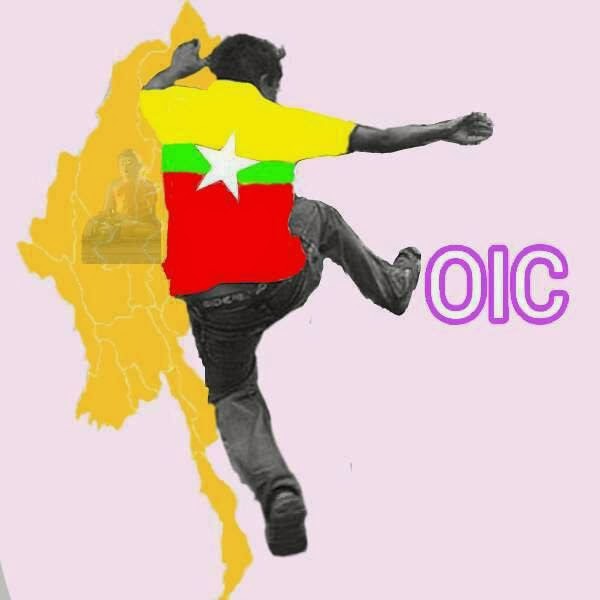
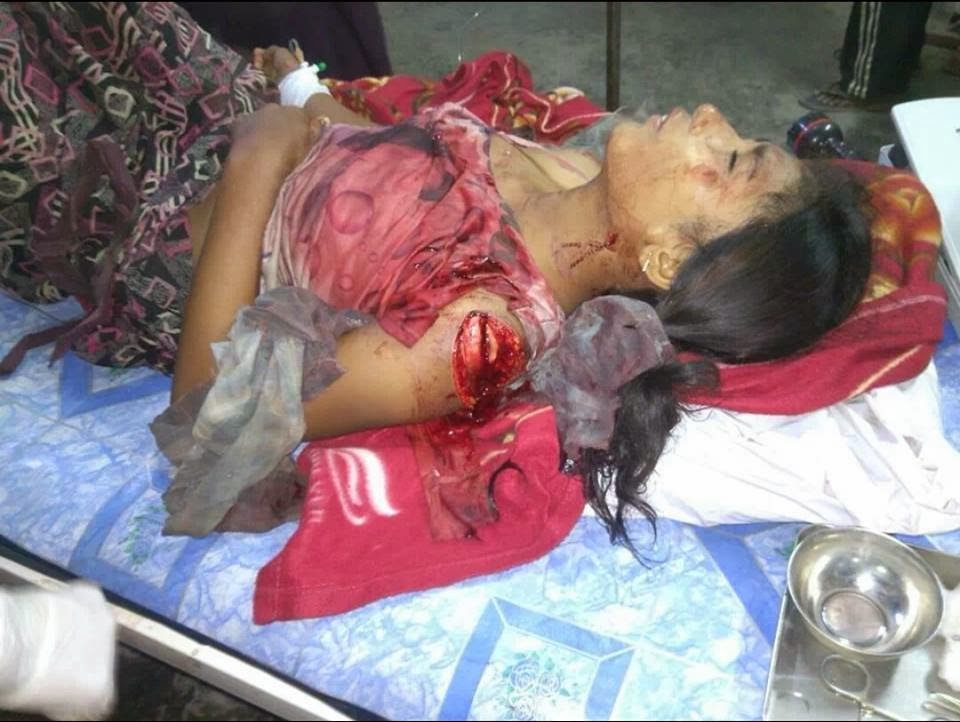
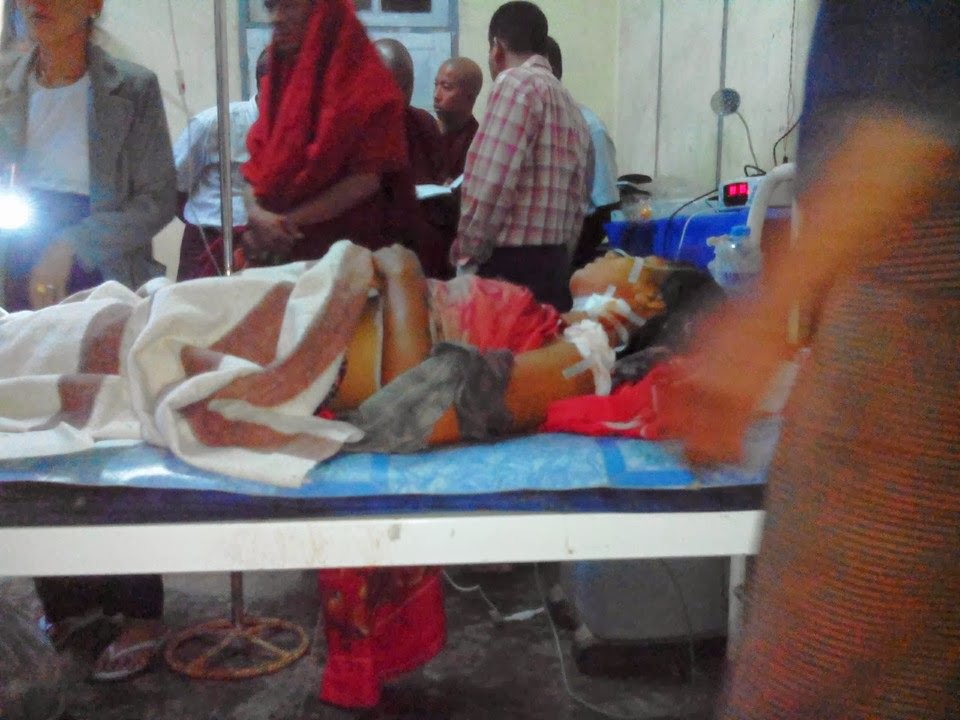
At 4:00 PM, on the 2nd of November, 2013, at Sin-aing Village, Pauktaw Township, Rakhine (Arakan) State, a crime against Arakanese Buddhist women was committedby the Bengali Muslims (so-called Rohingya). It happened as follows. Some 30 Arakanese Buddhist women went for collecting mollusks at that time and some 50 Bengali Muslims hacked them with knives. Consequently, Ma Hla Khin, a 40-year-old Arakanese Buddhist woman, died from the wounds on the spot and Ma Than Khin, an 18-year-old Arakanese Buddhist girl whose father is named U Sein Hla Tun, got quite a serious wound on her left arm, another on her back, another wound on her neck. Now the victim woman has been hospitalized as an emergency patient at Sittwe General Hospital. ွွSome Arakanese scholars opine that Bengali Muslims did this as they want to do something bad towards the Arakanese community and then to reverse the story in their pro-Bengali media, and that the Bengali Muslims did this because they got news that OIC will come to Myanmar soon!


Myanmar’s 2015 Stock Exchange Deadline at Risk: Southeast Asia

[postlink] https://burmacampaignjapanteam.blogspot.com/2013/09/myanmars-2015-stock-exchange-deadline.html [/postlink]

A woman leaves the Myanmar Securities Exchange Centre (MSEC), a joint venture between state-owned Myanma Economic Bank and Daiwa Institute of Research Ltd., a unit of Japan’s second-largest brokerage, in Yangon on May 3, 2012.
 Photographer: Soe Than Win/AFP/GettyImages

Myanmar is running behind schedule for starting a stock exchange by 2015 after delays in getting the legal framework in place, said an executive at Japan Exchange Group Inc. (8697), which is assisting on the project.
“We’re pressed for time,” Koichiro Miyahara, senior executive officer at Japan Exchange, said in an interview in Tokyo on Aug. 27. He said the late approval of a capital markets bill has delayed the project, and it’s up to the Myanmar government as to how fast it can set up related organizations such as a securities regulator.
Japan Exchange’s predecessor Tokyo Stock Exchange Group Inc. and Daiwa Securities Group Inc. (8601) were chosen last year to help Myanmar set up a stock exchange as the Southeast Asian nation opens itself from decades of isolation and military rule. Companies from Coca-Cola Co. to Unilever Plc. are investing in the country of 64 million people after the U.S. eased economic sanctions last year.
“Like any other modern economy, Myanmar needs a capital market to allow companies to raise funds,” said Moe Thuzar, a Singapore-based research fellow at the Institute of Southeast Asian Studies. “It is more important to ensure that appropriate regulatory and operational infrastructure is in place” rather than meet an arbitrary deadline, she said.

Passed Law

Myanmar President Thein Sein signed the Securities Exchange Law on July 31. The legislation sets rules that include the establishment and operation of a securities regulator to oversee trading activity.
Miyahara, who is in charge of Japan Exchange’s contribution to the project, said he had expected the bill to be passed at the start of 2013 and the delay will shorten the time for developing the bourse by about a year. His company will make “every effort” to complete the work on time, he said.
Regulations still need to be developed under the law to outline how the exchange will function, Maung Maung, director general at the Central Bank of Myanmar, said in a phone interview yesterday. The government will begin working on infrastructure such as buildings and software for the bourse next year and it will begin operating in 2015, Deputy Finance Minister Maung Maung Thein said at a briefing on Aug. 23.
Japan Exchange and Daiwa’s research unit, both based in Tokyo, have completed a report on the framework for the exchange, including plans for its functions and system infrastructure, Miyahara, 56, said. They will submit the document to the Myanmar government this month, he added.

Shigeto Inami, managing director of Myanmar Securities Exchange Centre, said about eight companies may be listed when the exchange opens. Photographer: Junko Kimura/Bloomberg

Investor Interest

The Securities Exchange Law doesn’t say whether foreigners will be allowed to trade on the bourse.
Jim Rogers, chairman of Rogers Holdings in Singapore, and Mark Mobius, executive chairman of Templeton Emerging Markets Group, are among investors who see opportunities in the country over time.
“It’ll take time for Myanmar, but Myanmar definitely is going to get more and more investment,” mainly in infrastructure, Mobius, who manages $53 billion, said in an interview on July 29. He has indirectly invested in the nation through companies listed in Singapore and Thailand.
About eight companies may be listed when the exchange opens, according to Shigeto Inami, managing director of Myanmar Securities Exchange Centre, a joint venture between state-owned Myanma Economic Bank and Daiwa Institute of Research Ltd., a unit of Japan’s second-largest brokerage. Two stocks are currently traded over the counter at the center, making them candidates to list on the new bourse, Inami said.

Cambodia, Laos

Those companies are Myanmar Citizens Bank Ltd. and Forest Products Joint Venture Corp. Soe Thein, an executive director at the center, declined to comment on the performance of the two stocks in the over-the-counter market or whether the semi-government institutions are candidates for listing.
Other frontier Southeast Asian economies have opened stock exchanges in recent years, with mixed results. Trading on the Cambodia Securities Exchange began last year and it currently has one company listed, according to its website. The two-stock Laos Composite Index (LSXC)has risen 30 percent since its bourse started trading in January 2011. It slipped 0.1 percent at 9:41 a.m. in Vientiane.
“If you look at Cambodia and Laos, the stock exchanges haven’t been a great success,” said Thura Soe Paing, managing director of All Myanmar Investment Partners, a Yangon-based investment and business advisory company. “What I hope an establishment of a stock exchange will drive forward is the development and installation of business standards.”
Japan Exchange, which itself listed in Tokyo in January following the merger of Tokyo Stock Exchange and Osaka Securities Exchange Co., expects the Myanmar project will enable it to export its expertise elsewhere, Miyauchi said.

Toshiba, KDDI

“We’d like to maximize our experience and know-how to work with countries that are thinking about setting up stock exchanges,” said Miyahara.
Other Japanese companies are working on the Myanmar project. Toshiba Corp. (6502) andKDDI Corp. (9433) won an order from Daiwa Research to supply a data center for the exchange, Tokyo-based Toshiba said on July 3.
President Thein Sein has allowed more political freedom and loosened economic controls since coming to power two years ago. Assuming his government maintains momentum on policy reform, the economy will expand 6.5 percent in the year ending March 2014 and 6.7 percent in the following fiscal year, the Asian Development Bank forecast in April.

Phone Network

One area where Thein Sein has already moved to modernize the economy is in telecommunications. In June, Norway’s Telenor ASA (TEL) and Ooredoo QSC of Qatar won licenses to expand the country’s telecommunications network, beating nine other bidders. The government went ahead with the award even after parliamentarians tried to delay the decision.
A stock exchange with a strong securities regulator would help to improve corporate governance in a country that remains plagued by corruption. Myanmar is ranked 172 out of 176 nations in Transparency International’s 2012 corruption index.
“I hope Myanmar corporates know that it is a painful process to list and what will be required of them with regards to reporting, transparency and accountability,” said Thura Soe Paing of All Myanmar Investment. “It will be worth it in the long run.”
To contact the reporters on this story: Takako Taniguchi in Tokyo atttaniguchi4@bloomberg.net; Kyaw Thu in Bangkok at kthu1@bloomberg.net
To contact the editor responsible for this story: Chitra Somayaji at csomayaji@bloomberg.net
By Takako Taniguchi & Kyaw Thu - Sep 4, 2013 12:05 PM GMT+0900

THE ‘ROHINGYA’ - IDENTITY TRICK

[postlink] https://burmacampaignjapanteam.blogspot.com/2013/08/the-rohingya-identity-trick.html [/postlink]


August 22, 2013 at 2:59pm
# THE ‘ROHINGYA’ - IDENTITY TRICK
...................................................
# The Invention of the ‘ROHINGYA’ and the Manipulation of History and Facts

       # In 1960, the Mujahid insurgency was finally (but only temporarily) defeated by General Ne Win. Then the Muslim leadership realized that they needed a new story about the Muslims in Arakan - and they embraced a new identity - and they now called themselves ‘Rohingya’.
This new word helped to make it much easier to manipulate media and opinion. The terms Bengali-Muslim and Chittagong-Muslim indicate - quite obviously - that they came from outside Burma, and that they had roots in, Bengal or specifically the Chittagong area of Bengal. The term Rohingya carries no similar eaning, making it much easier to spread the ‘new history’ which now says that the Rohingya actually have been inhabitants of this land for a long long time. To dominate the region, they must become ‘indigenous residents’ of the region and they need that to be unquestionably accepted by the international community.

# Repeated lies become a false truth over time - it is happening now.
# The Rohingya and the pro-Rohingya groups will make these claims and others:
# Claim 1 -The Rohingya are Actually Indigenous to Arakan.
• Arakan has had a Buddhist identity (before that - Vedic/Hindu), verified by archaeology (royal capital cities, inscriptions on stone which lists kings and royal dynasties), artifacts, books and manuscripts, and many of these date back over 1000 years before Islam even existed.

• There is no archeological evidence of major Muslim cities, palaces, or large
population.
# Claim 2 - The Rohingya came from Muslim Persian, Turkish, and Bengali Traders, 
              Shipwrecked in the 7th century, on the Shores of Arakan.

• It was in the 13th century that the Bengal area and the Turkish lands even started to become Muslim. Bengal was mostly Buddhist for nearly 2000 years. Its last Buddhist dynasty - starting in the 8th century and known as the Pala Empire - weakened after the destruction of the famous ancient Buddhist university of Nalanda by Muslim invaders in the late 12th century and succumbed to the Muslim conquest in the 13th century, with large scale conversions starting, and continuing for centuries. Turkey started changing to Islam in the 13th century, and its Roman Empire capital of Constantinople (now Istanbul) fell to the Muslim armies in the 15th century. Non-Muslims were required to pay a ‘jiyza’ (tax) in order to remain non-Muslim. For a couple of centuries the majority of Persians were not Muslim, though they were ruled by the Arab Muslims.

• It is in the 7th century that Mohammed lived and Islam began - and Arakan was 5000 long miles away. The shipwreck stories are just that - stories. There is no evidence or correlating material. Around the world there are stories of shipwrecks and ship journeys - including the story of Noah’s Ark.

• Thus, it is abundantly clear that such statements as we have today, about Muslims arriving in Arakan in the 7th century, are undisputedly false, and impossible to be true. And, it verifies, again, the fact that the Rohingya and their supporters are engaged in putting out so much false media.

• It can even be said that if, indeed, sailors from those areas actually landed in Arakan, then they most certainly most certainly were not Muslim!

# Claim 3 - The language ‘Rohingya’ and the ‘Rohingya’ people originated and existed
long ago, in Arakan.
• The only old reference to ‘Rohingya’ is in a book printed in 1799 - A Comparative Vocabulary of Some of the Languages Spoken in the Burma Empire - by Francis Buchanan8. The Rohingya mention this book and quote one sentence, which they think validates their claims.

Much of the book deals with the four main languages of the Burma area - which include the Burmese and the Arakanese languages. Buchanan then mentions three small dialects, derived from the languages of the‘Hindu Nation’ (India), one of which he called ‘Rooinga’ which is spoken by ‘Mohammedans’ (Muslims) who live in Arakan.

# From the book:

• The proper natives of Arakan, call themselves Yakain, which name is also commonly given to them by the Burmas. (Yakain = Rakhine. Burmas = Burmese) The ‘proper natives’ is quite definitive.

• I shall now add three dialects, spoken in the Burma empire, but evidently derived from the language of the Hindu nation. (The Hindu nation = India, at that time British India, which included Bengal areas, but not Arakan.)

• The first is that spoken by the the Mohammedans, who have been long settled in Arakan, and who call themselves Rooinga, or natives of Arakan. (This is the one sentence that the Rohingya try to use to support their claims.) ‘long settled’ is vague. How long? 50 years? 100 years? However, it is clear what ‘long settled’ does NOT mean - it doesn’t mean ‘native’, or ‘proper natives’, or ‘indigenous’. And ‘settled’ means, came from somewhere else and settled here or there, though not long enough to be considered ‘native’.

Hence, the next sentence:

• Both these tribes, by the real natives of Arakan, are called Kulaw Yakain, or stranger Arakan. (Buchanan is referring to the ‘Mohammedans’ and the ‘Hindus’ when he writes: ‘Both these tribes’). Again, he recognizes that the Yakain (Rakhine) Buddhists are the ‘real natives’ which implies, ‘the mother culture’, and that the Muslims and Hindus are ‘outsiders’ or ‘strangers’ who use languages from India.

The adaptation of the term ‘Rohingya’ was a clever political move - to reinvent the history and claim a solid link to the land. However, the term ‘Rooinga’ or ‘Rohingya’ was not noted at all - during the following 150 years - in any other study or reference other than Buchanan’s book. This indicates that the term was so unimportant, and/ or the population of Muslims at that time was so small and insignificant, that perhaps Muslims in one town, or a small area, called themselves ‘Rooinga’, but other small communities of Muslims didn’t know that term. And, when the term was seemingly invented, or reinvented - in the 1950s, nobody knew it or recognized it, many even didn’t like it.

Most people in the world do not forget what they call themselves - The French didn’t forget that they were French and spoke French language, and the Chin didn’t forget that they are called Chin and spoke one or more Chin languages. However, the term ‘Rooinga’ was entirely forgotten for 150 years, since being briefly mentioned in Buchanan’s book. It was not mentioned by the Dutch, the Portuguese, the Chinese, the Indians, or the bureaucratic British.

The Muslims didn’t seem to use it, which means that it obviously was not an important word for them, they forgot about it, it was not used by the Bengal Muslims, not used by the Chittagong Muslims, not used by the Bengali V-force, not used by the Mujahid Party in 1948 when they gave an ultimatum to the government, and not used by the Mujahidin Army which launched a ‘jihad’ (holy war in the name of Allah) on Burma. It was not used by Bogyoke Aung San, and also not used by U Nu - who had many dealings with the Muslims of Burma.

• During the British colonial period the Muslims called themselves Bengali Muslims, or often more specifically, Chittagong Muslims.

• Buchanan’s book actually proves that the Bengali Muslims (Rohingya) are not indigenous to Arakan. Buchanan defined the Yakain (Rakhine) as the ‘native’ people of the land, and also, the ‘proper’ people.

• When ‘Rohingya’ started to be used, it was a new word for everybody - and it had a purpose - to turn attention away from the terms ‘Bengali Muslims’ or ‘Chittagong Muslims’ or ‘Arakan Muslim’ which clearly show the origins of the person in question.

If the word ‘Rohingya’ or ‘Rooinga’ existed long ago to describe those people why did they never use it?

# Claim 4 - Many Arakan Kings Were Muslim.
• It is rather absurd to claim that some Arakan Kings were actually Muslim. Some point to coins of a certain time that had a Persian script on them (4th coin below). But that does not prove the Kingdoms were Muslim at all. For some time the Arakan Kingdom included parts of Bengal (including the Chittagong area) which had become majority Muslim after q nearly 2000 year Buddhist history.

• Persia was defeated and occupied by the Muslim Arab armies in the 7th century, but, only an estimated 10% of the Persian population became Muslim at that time. The conversion to Islam was very gradual in Persia, and took a couple of centuries - during which time more than a millenium of Buddhist history. Having the Persian script on the coins gave the Buddhists more legitimate rule over the Muslims.

• Also, concerning the coins - consider that U.S. one dollar bills have Latin phrases, Roman numerals, an Egyptian pyramid and the ‘Eye of Horus’ on them. Chinese money has five languages on them: Chinese Mandarin, Tibetan, Mongolian, Zhuang, and the Muslim minority Uigher language - and, in addition, has Western numbers - and China clearly is not beholden to any one of those cultures. Hilltribe people in many areas of Southeast Asia still have and value old British Indian Rupees. Even North Korean and Iranian money has some English and western numbers. So, the appearance of other languages on a country’s currency does not necessarily show power or influence of those other entities.


[Excerpt from AHRDO Report entitled 'Conflict & Violence in Arakan / Rakhine State, Myanmar (Burma): What is Happening, Why and What to do']

DOWNLOAD here: 
http://www.scribd.com/doc/157485834/Arakan-Violence-Report-by-AHRDO

Re-presented by: Zwe Thit (Rammarmray)
                         22.8.2013

Peace Prize winner fights for survival of her health clinic

[postlink] https://burmacampaignjapanteam.blogspot.com/2013/08/peace-prize-winner-fights-for-survival.html [/postlink]


The winner of this year's Sydney Peace Prize, to be announced on Saturday, is fighting for the future of her internationally-renowned health clinic based in Thailand after AusAid slashed its funding last month. 

As famous in Myanmar as her fellow countrywoman Aung San Suu Kyi, Dr Cynthia Maung, 54, has not returned to her homeland since she was forced to flee it, 25 years ago next month, during the great 8888 Uprising. 

The prize is a way of bringing attention to Burma. 

The Sydney Peace Foundation will announce on Saturday that Dr Maung is the winner of the 2013 Sydney Peace Prize, an international award that celebrates the achievements of an individual who demonstrates in daily life a commitment to the pursuit of peace with justice. Maung has been running a clinic that she founded herself in 1989 in a dilapidated shed in the middle of a muddy field in the northwestern Thai border town of Mae Sot. 
But the woman affectionately known as ''Mother'' and her 580-odd staff, most of them from Myanmar like herself, are still reeling from AusAID's announcement last month that it won't continue its funding of the clinic into 2014. 

Last year, its contribution of 13 million baht ($456,000) amounted to one quarter of the total donations it received. 

"This money was crucial to improving maternal and child health-quality services to these vulnerable people on the border," says Maung. "We're at a loss to understand the decision."

In humble surrounds she treats internally displaced people from Myanmar who continue to be deprived of adequate healthcare in their own country by a harsh ruling junta. 

They travel, sometimes for days on end, to reach the sanctuary of the Mae Tao Clinic, a place where they can safely give birth to their babies, seek treatment for the complex strain of malaria endemic to the region and have their children vaccinated. Last year, it recorded a total of 148,561 visits. 

The strong credentials of the clinic won over the peace prize judges. 

"What Dr Cynthia has achieved against the odds really impressed the jury," says foundation chair Professor Stuart Rees. 

"Her selflessness and the notion that justice is about not financially penalising people for being sick, that healthcare shouldn't be a commercial proposition, affected them greatly." 

Previous recipients of the award include Sekai Holland, Professor Noam Chomsky, Archbishop Emeritus Desmond Tutu and Xanana Gusmao, president of the National Council for East Timorese Resistance. 

Maung, a woman of immense but quiet dignity, acknowledges the honour with a gracious incline of her head. 

"The prize is a way of bringing international attention to the plight of Burma," she says. "It highlights that the peace process needs to be monitored by the international community. It's not going to be a gift." 

August 17, 2013

Sharon Bradley


Read more: http://www.smh.com.au/national/peace-prize-winner-fights-for-survival-of-her-health-clinic-20130816-2s25e.html#ixzz2cHhCWTL8 

Read more: http://www.smh.com.au/national/peace-prize-winner-fights-for-survival-of-her-health-clinic-20130816- - See more at: http://www.dawnmanhon.com/2013/08/blog-post_6627.html#sthash.JKmcPtGD.dpuf
 
Support : Website | Template | Mas Template
Copyright © 2012. Burma Campaign Japan - All Rights Reserved
Template Created by Creating Website Published by Template
Proudly powered by Blogger